
Published September 30, 2025
💰 Who Pays for What in Closing Costs in Colorado? A Guide for Buyers & Sellers

Why Closing Costs Matter in Colorado Real Estate
When buying or selling a home in Colorado, most people focus on the purchase price. But the closing costs—the fees and expenses required to finalize the transaction—can add up quickly. Understanding who pays for what helps both buyers and sellers prepare, negotiate, and avoid surprises at the closing table.
What Are Closing Costs?
Closing costs are the expenses beyond the property’s purchase price that are required to complete the sale. In Colorado, these typically range from 2%–5% of the loan amount for buyers and 6%–10% of the sale price for sellers (including real estate commissions).
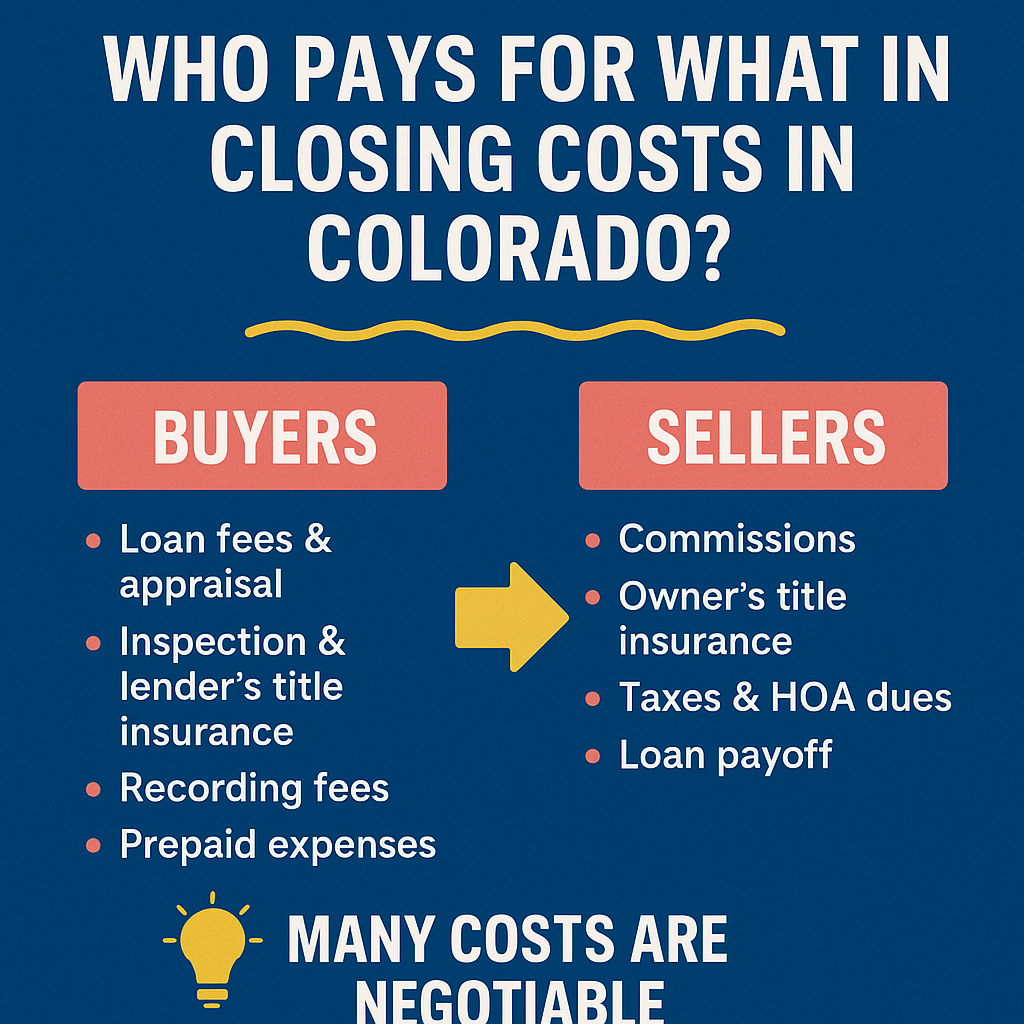
Typical Buyer Closing Costs in Colorado
Buyers usually cover:
Loan origination fees – Charged by the lender to process the loan.
Appraisal fee – Required by lenders to confirm property value.
Credit report & underwriting fees – Lender processing costs.
Title insurance (lender’s policy) – Protects the lender against title defects.
Home inspection & survey (optional but common in Colorado).
Recording fees – Paid to the county to record the deed.
Prepaid expenses – Homeowner’s insurance, HOA dues, and property taxes held in escrow.
💡 Tip for buyers: Some closing costs can be negotiated with the seller through concessions.
Typical Seller Closing Costs in Colorado
Sellers usually cover:
Real estate agent commissions – Typically 5%–6% of the sale price (split between buyer and seller agents).
Title insurance (owner’s policy) – Protects the buyer against title defects.
Colorado state and county transfer taxes (where applicable).
Outstanding property taxes or HOA dues.
Loan payoff costs – If you still owe on your mortgage, the payoff comes from closing.
Title company or attorney closing fee (often split, but sometimes paid by seller depending on contract).
💡 Tip for sellers: Offering to cover some buyer closing costs can make your home more attractive in a competitive market.
Negotiating Closing Costs in Colorado
Colorado real estate contracts are flexible, meaning buyers and sellers can negotiate who pays certain fees. Common scenarios include:
Seller concessions: The seller agrees to cover part of the buyer’s closing costs to secure the deal.
Market conditions: In a buyer’s market, sellers may offer to pay more. In a hot market, buyers usually cover the majority.
Builder incentives: In new construction, builders often cover closing costs if buyers use their preferred lender.
Average Closing Cost Breakdown in Colorado
Buyers: Typically 2%–5% of the loan amount.
Sellers: Typically 6%–10% of the sale price (including commissions).
Negotiable items: Title fees, closing fees, and some prepaid expenses.
Final Thoughts
Closing costs in Colorado don’t have to be confusing or overwhelming. By knowing who typically pays for what, both buyers and sellers can budget properly, negotiate strategically, and avoid surprises.
At Engle Homes Group, we walk our clients in Elizabeth, Parker, Castle Rock, and surrounding Colorado communities through every step of the process—from offer to inspection to closing—so you’re never left guessing.
👉 Thinking about buying or selling a home in Colorado? Let’s talk today and make sure you’re prepared for closing!

Marjorie Engle
| Engle Homes Group | eXp Realty
or another way