
Published September 9, 2026
When Douglas County Reached Kansas: The Colorado Border Most People Don’t Know About

When Douglas County Reached Kansas: The Colorado Border Most People Don’t Know About
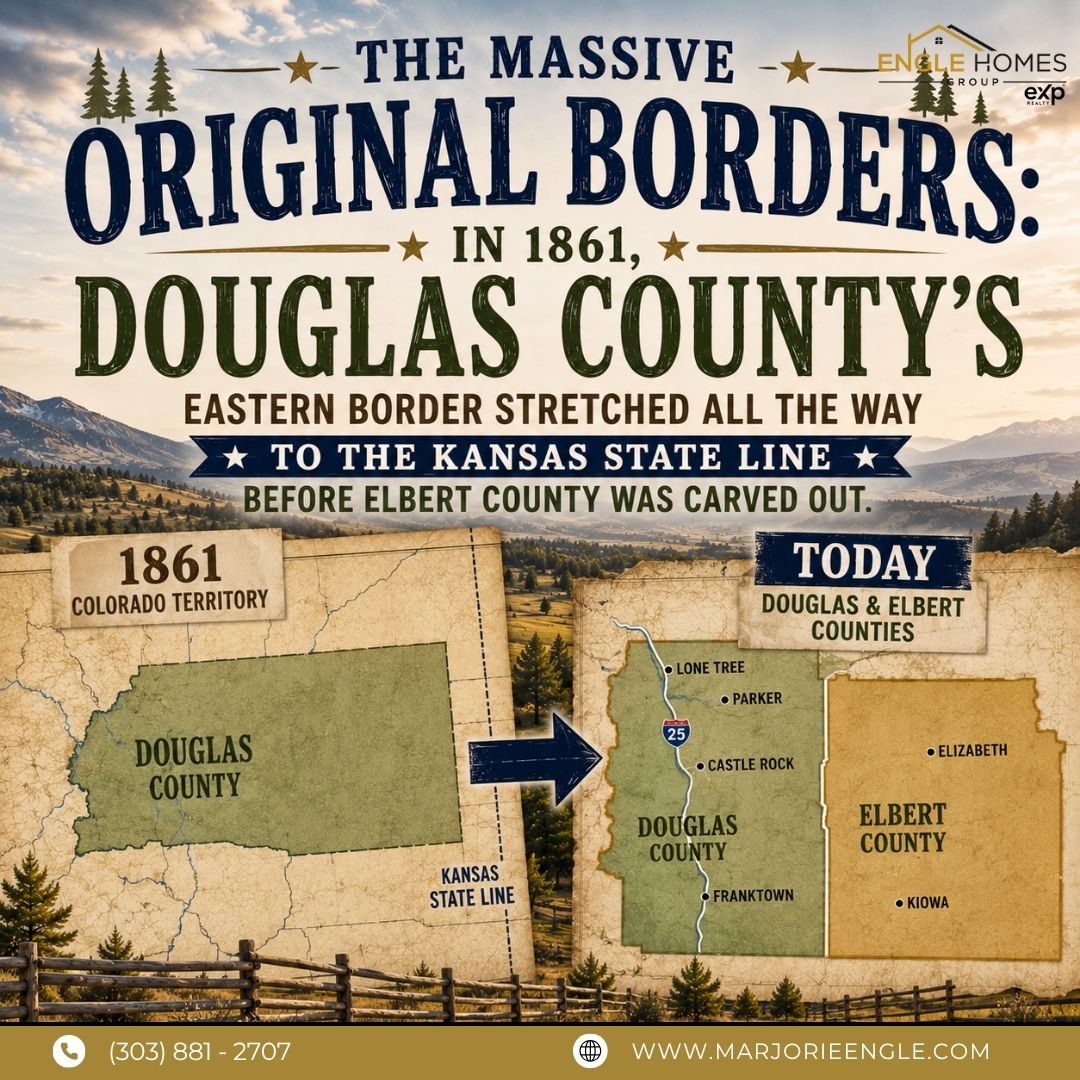
- It’s hard to imagine today, but Douglas County, Colorado, was once much larger than the county we know now.
- When Douglas County was established in 1861 as one of the original counties of the Colorado Territory, its boundaries extended far east across the plains. Later, as Colorado’s population grew and new counties were formed, that enormous territory was divided—including the creation of Elbert County in 1874.
- That means Douglas and Elbert counties share more than a border. They share a history.
Douglas County Looked Very Different in 1861
- Today, we associate Douglas County with communities like Castle Rock, Parker, Castle Pines, Lone Tree, and Franktown.
- But the original county covered a dramatically larger area extending eastward across Colorado's plains.
- As settlements developed, Colorado reorganized its county boundaries. Elbert County was eventually created from the eastern portion of Douglas County, helping form the geographic areas we recognize today.
- It’s an interesting reminder of just how much Colorado has changed in a relatively short period of time.
You Can Still See the Transition Today
- Drive east from Castle Rock or Parker through Franktown toward Elizabeth, and you can almost watch the landscape change.
- Suburban neighborhoods gradually give way to larger properties, Ponderosa pines, rolling grasslands, farms, ranches, and wide-open acreage.
- Cross into Elbert County, and the rural character becomes even more noticeable.
- That transition is one reason buyers searching for Douglas County real estate often end up considering Elbert County homes for sale as well.
Douglas County vs. Elbert County Real Estate
- The two counties are connected historically, but they can offer very different lifestyles today.
- Douglas County tends to appeal to buyers who want access to shopping, restaurants, major employment centers, newer neighborhoods, trails, and suburban amenities.
- Elbert County often attracts buyers looking for acreage, horse property, barns, workshops, agricultural uses, privacy, and more space between neighbors.
- Franktown and Elizabeth sit near that transition, making them especially interesting for buyers who want rural living without feeling completely disconnected from the south Denver metro area.
Why This Matters for Buyers
- If you're searching for Colorado acreage, don't let a county line unnecessarily limit your options.
- A buyer looking in Franktown may find that Elizabeth offers more acreage for their needs. Someone initially searching in Elizabeth may discover the right wooded horse property just across the county line in Douglas County.
- The house matters—but so do zoning, wells, septic systems, water rights, road maintenance, taxes, commute times, and how you plan to use the land.
Douglas County's original boundaries may be long gone, but the historical connection between Douglas and Elbert counties is still fascinating.
- Today, these neighboring counties give Colorado buyers an incredible range of choices—from established communities in Parker and Castle Rock to wooded Franktown acreage and wide-open properties around Elizabeth and Kiowa.
- And more than 160 years after those first county lines were drawn, this part of Colorado continues to evolve.
douglas-county-original-borders-elbert-county-colorado
Marjorie Engle | Engle Homes Group
Licensed Realtor in Colorado
📞 303-881-2707
Marjorie Engle
| Engle Homes Group | eXp Realty
or another way