
Published April 27, 2026
Water Source Matters: Buying Water Shares vs. Owning a Well in Colorado

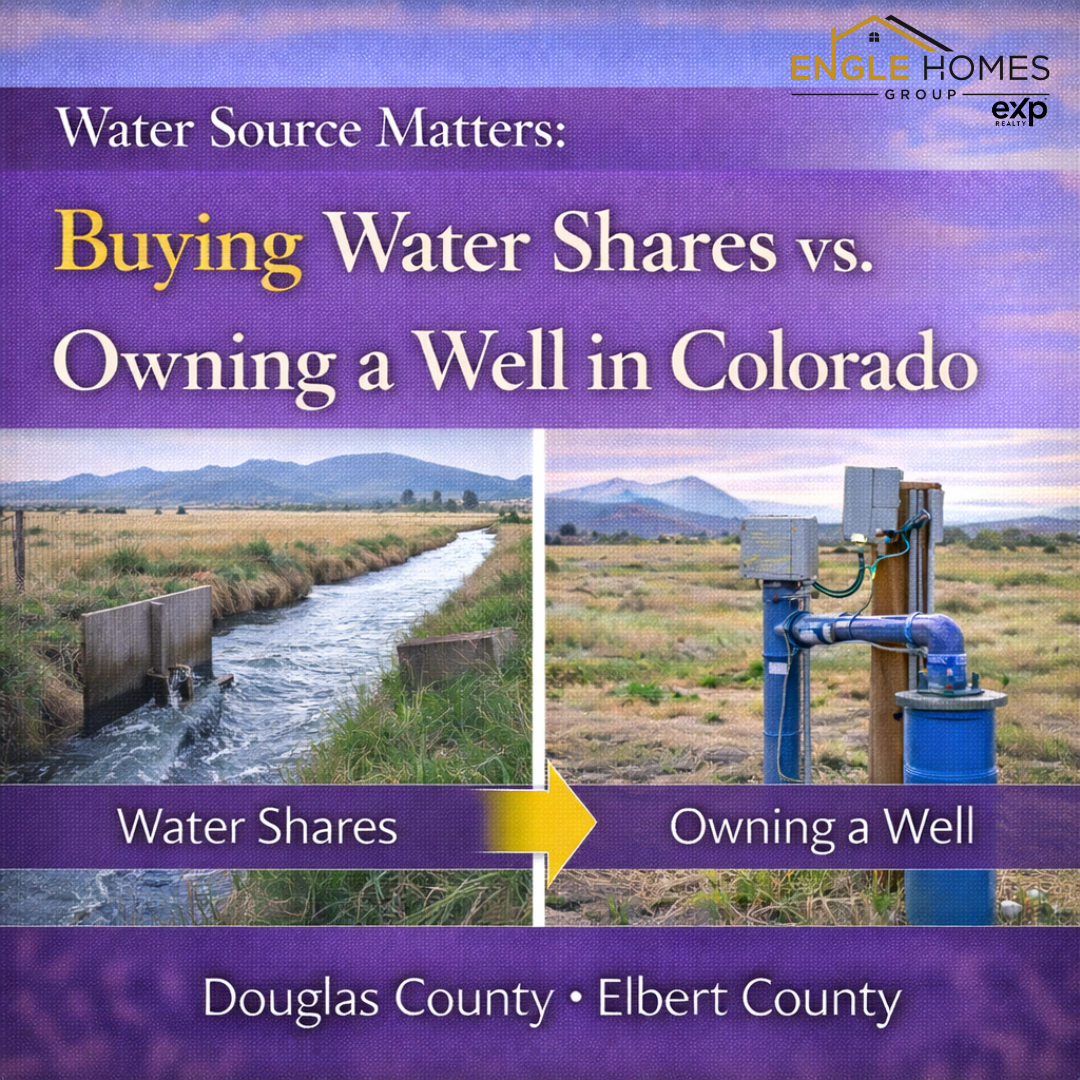
Water Source Matters: Buying Water Shares vs. Owning a Well in Colorado
- If you're buying land or a home in Elbert County or Douglas County, one of the most important decisions isn’t just the property—it’s the water.
- Many buyers ask:
- 👉 “Is it better to have water shares or a private well?”
- The answer depends on your goals, but the differences are significant—and they directly impact property value, usability, and long-term cost.
What Are Water Shares?
- Water shares represent ownership in a water company or irrigation system.
Instead of pulling water from underground, you receive access to water through:
- Ditches
- Irrigation systems
- Community water systems
Water shares are common in agricultural and legacy properties across Colorado.
What You Need to Know About Water Shares
Water shares typically:
- Allow for irrigation and agricultural use
- May support livestock watering
- Can sometimes be used for residential purposes (depending on the system)
- Are governed by priority water rights laws
👉 More shares = more water access
What Is a Private Well?
- A private well pulls water directly from underground.
- This is the most common setup in rural areas like Elbert County.
What You Need to Know About Wells
Wells:
- Require a permit
- Have usage restrictions (especially domestic wells)
- Provide water directly to the property
- Require maintenance and electricity to operate
The BIG Difference (Simple Breakdown)
- 👉 Water Shares = Surface water rights + distribution system
- 👉 Well = Groundwater pulled directly from your property
Pros of Water Shares
- ✔ Often allow more water usage
- ✔ Ideal for irrigation, farming, and livestock
- ✔ Can significantly increase property value
- ✔ May support larger-scale land use
Cons of Water Shares
- ✘ Can be expensive to purchase
- ✘ May require ditch/company maintenance fees
- ✘ Availability can vary year to year
- ✘ More complex legal structure
Pros of Owning a Well
- ✔ Direct control of your water source
- ✔ No need to rely on shared systems
- ✔ Common and widely accepted
- ✔ Lower upfront complexity
Cons of Owning a Well
- ✘ Usage restrictions (especially domestic wells)
- ✘ Limited irrigation capabilities
- ✘ Drilling and maintenance costs
- ✘ Risk of lower production in some areas
Elbert County vs Douglas County
Elbert County
- Wells are the most common
- Water shares are less common but highly valuable when available
- Ideal for acreage living
Douglas County
- More access to municipal water systems
- Wells still exist in rural areas
- Water shares are less common in suburban zones
Which One Is Better?
- It depends on how you plan to use the property.
Choose Water Shares if:
- You want irrigation
- You plan to farm or raise animals
- You need higher water volume
Choose a Well if:
- You want simplicity
- You’re using the property for residential living
- You don’t need large-scale water usage
Can You Have Both?
- Yes—and this is often the best scenario.
Some properties include:
- 👉 A domestic well for household use
- 👉 Water shares for irrigation
This combination offers flexibility and increased value.
Common Buyer Mistakes
- Assuming all water access is the same
- Not verifying water rights documentation
- Overlooking usage restrictions
- Not understanding ditch/company rules
- Ignoring long-term water availability
Water is one of the most important assets in Colorado real estate.
- When buying property in Douglas or Elbert County:
- 👉 Water shares offer more flexibility and potential value
- 👉 Wells offer simplicity and independence
- The right choice depends on your lifestyle, land use, and long-term plans.
If you have questions about water rights, wells, acreage properties, or buying land in Douglas or Elbert County, I’m happy to walk through the full picture so you can make a confident decision.
Marjorie Engle – Realtor
📞 303-881-2707
🌐 www.marjorieengle.com
|


or another way