
Published July 24, 2026
The "Rhyolite" Legacy: How Castle Rock's Famous Butte Shaped the Town's History

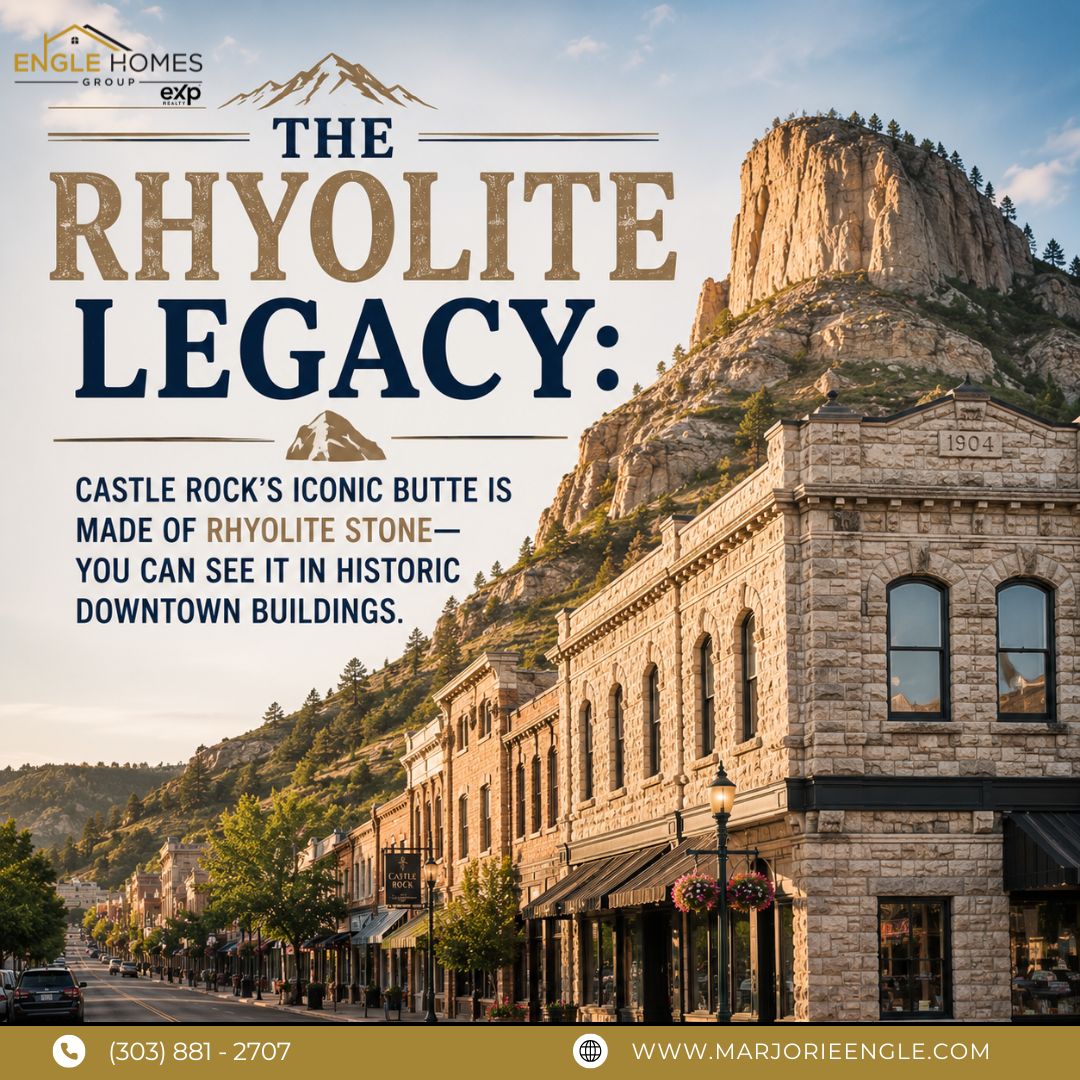
The "Rhyolite" Legacy: How Castle Rock's Famous Butte Shaped the Town's History
- One of the first things you'll notice when visiting Castle Rock, Colorado, is the massive rock formation towering above downtown. It's the landmark that gave the town its name, but many people don't realize it's also responsible for shaping much of Castle Rock's early history.
- That iconic butte is made primarily of rhyolite, a volcanic rock that became one of the area's most valuable natural resources in the late 1800s. In fact, if you stroll through Historic Downtown Castle Rock, you'll still see many buildings constructed with locally quarried rhyolite stone.
- For homebuyers considering a move to Douglas County, understanding Castle Rock's unique history helps explain why the community has such a distinct character compared to many newer Colorado suburbs.
What Is Rhyolite?
- Rhyolite is a light-colored volcanic rock formed millions of years ago from cooling lava.
It's known for being:
- Extremely durable
- Attractive in appearance
- Resistant to weather
- Ideal for building construction
Because of its strength and natural beauty, rhyolite became one of Colorado's most sought-after building materials during the late 19th century.
Why Is Castle Rock Called Castle Rock?
- The town gets its name from the towering rhyolite butte that resembles the shape of a medieval castle.
- Visible from miles away, this natural landmark became an important reference point for early settlers traveling through the area.
- Today, it remains one of the most recognizable landmarks along the Front Range.
A Quarry That Built a Community
- During the late 1800s and early 1900s, Castle Rock became known for its thriving rhyolite quarries.
Stone from the area was used in:
- Homes
- Churches
- Schools
- Commercial buildings
- Government buildings
Much of the historic downtown still showcases this beautiful local stone.
Walk Through History
- One of the best ways to experience Castle Rock's history is simply by walking downtown.
You'll notice many historic buildings featuring:
- ✔ Hand-cut rhyolite stone
- ✔ Historic architecture
- ✔ Original masonry details
- ✔ Colorado craftsmanship
These structures give downtown a timeless character that newer developments simply can't replicate.
Why Buyers Love Historic Downtown Castle Rock
- People moving to Castle Rock often appreciate that the community offers the best of both worlds.
You get:
- ✔ Modern neighborhoods
- ✔ Excellent schools
- ✔ Extensive trail systems
- ✔ New construction communities
While still enjoying:
- ✔ Historic downtown
- ✔ Local restaurants
- ✔ Boutique shopping
- ✔ Colorado history
Castle Rock Has Grown—Without Losing Its Identity
- Although Castle Rock has become one of Colorado's fastest-growing communities, the town has intentionally preserved many of its historic buildings and landmarks.
- That commitment helps maintain the unique charm that attracts so many buyers every year.
Douglas County's Blend of History and Growth
One of the reasons Douglas County is so desirable is its balance between:
- Historic communities
- New development
- Outdoor recreation
- Strong schools
- Easy commuting
Castle Rock perfectly represents that balance.
The Butte Is Still the Town's Symbol
Today, Castle Rock's iconic rhyolite butte remains:
- A local landmark
- A hiking destination
- A community symbol
- A favorite photography location
Residents often use it as a reminder that even as the town grows, its history remains at the center of the community.
Historic Buildings Create Character
- Unlike communities built entirely within the last few decades, Castle Rock offers architectural diversity.
Historic rhyolite buildings create:
- ✔ Visual interest
- ✔ Local identity
- ✔ Small-town charm
- ✔ Walkable streets
That character continues to attract both visitors and homebuyers.
Why This Matters in Real Estate
- People don't just buy homes—they buy communities.
Castle Rock's preserved history, beautiful downtown, and recognizable landmarks all contribute to:
- Strong community pride
- Lifestyle appeal
- Tourism
- Buyer demand
Those qualities help make Castle Rock one of Colorado's most sought-after places to live.
Nearby Elbert County Offers Its Own History
While Elbert County is best known today for its ranches, horse properties, and open space, many residents enjoy visiting nearby Castle Rock for:
- Dining
- Shopping
- Community events
- Historic downtown
- Local businesses
The two communities complement each other beautifully.
Castle Rock's iconic rhyolite butte is much more than a scenic landmark.
- It helped build the town—literally.
- From the historic buildings downtown to the community's enduring identity, rhyolite continues to tell the story of one of Douglas County's most beloved communities.
- If you're looking for a Colorado town that blends history, outdoor recreation, and modern amenities, Castle Rock offers a lifestyle that's hard to beat.
Castle Rock Colorado real estate, Castle Rock history, rhyolite Castle Rock, Historic Downtown Castle Rock, Douglas County homes for sale, moving to Castle Rock Colorado, Castle Rock butte, Douglas County real estate, living in Castle Rock, Colorado relocation.
If you're thinking about moving to Castle Rock, buying a home in Douglas County, or exploring Colorado communities with history, character, and incredible amenities, I'd love to help you find the perfect place to call home.
Marjorie Engle – Realtor
📞 303-881-2707
🌐 www.marjorieengle.com

Marjorie Engle
| Engle Homes Group | eXp Realty
or another way