
Published August 21, 2026
The Palmer Divide Effect: Why Douglas & Elbert Counties Can Look Greener Than Denver
The Palmer Divide Effect: Why Douglas & Elbert Counties Can Look Greener Than Denver
- If you've driven from Denver toward Castle Rock, Franktown, Elizabeth, or Kiowa, you've probably noticed the landscape begin to change.
- The elevation rises. The terrain becomes more rolling. Ponderosa pines become more common. And depending on the season, portions of Douglas County and Elbert County can look noticeably greener than areas closer to Denver.
- One reason is the Palmer Divide.
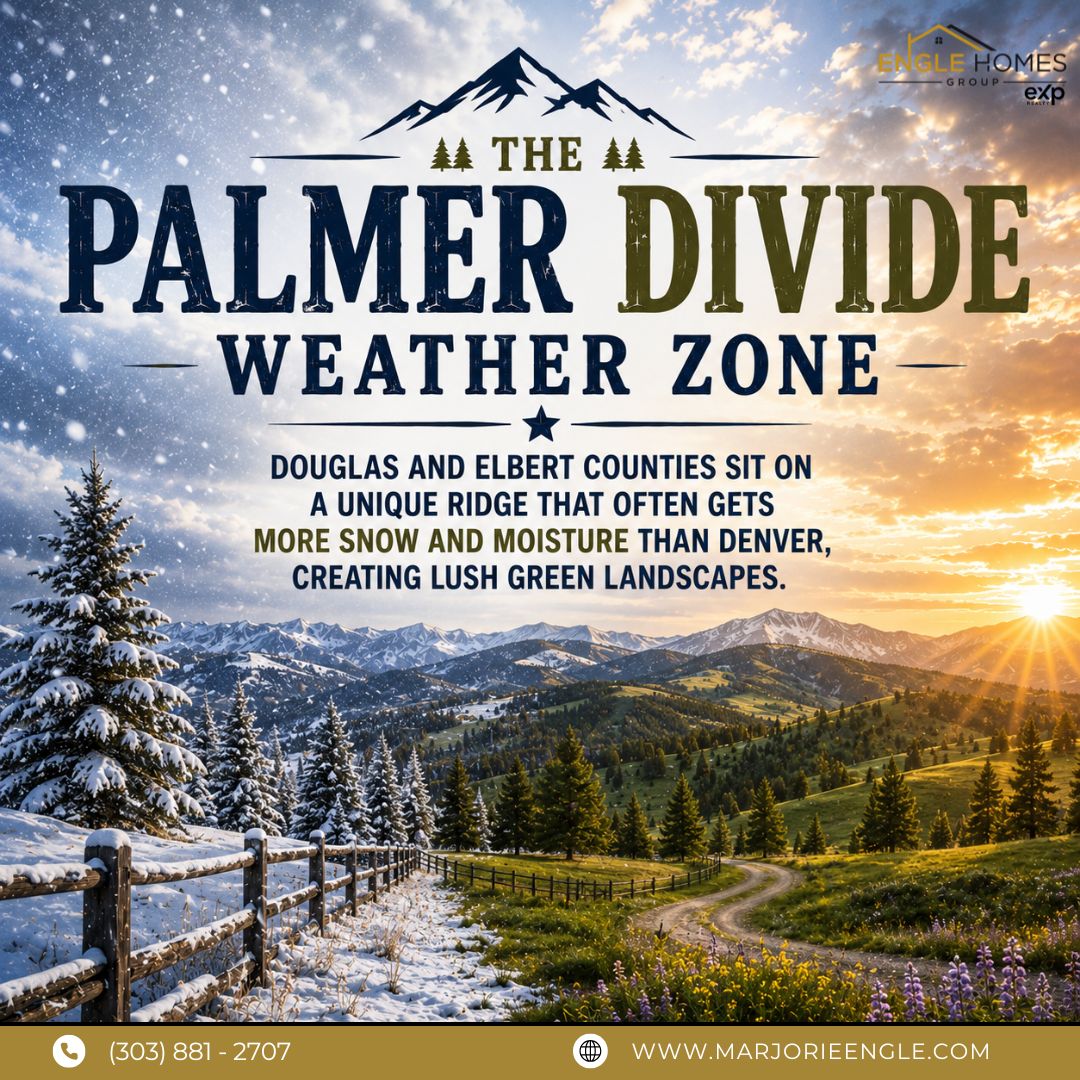
- This elevated ridge between the Denver and Colorado Springs areas influences local weather patterns and can help parts of Douglas and Elbert counties receive more precipitation—including some impressive Colorado snowstorms.
- For buyers considering moving to Douglas County or Elbert County, Colorado, the Palmer Divide is worth understanding because it affects much more than the scenery.
What Is the Palmer Divide?
- The Palmer Divide is a high-elevation ridge running generally east from the Front Range between Denver and Colorado Springs.
- Rather than being a single mountain, think of it as a broad elevated region separating the South Platte River drainage to the north from the Arkansas River drainage to the south.
Communities around the Palmer Divide include areas near:
- Castle Rock
- Franktown
- Larkspur
- Monument
- Elizabeth
- Kiowa
- Rural Douglas County
- Western Elbert County
Elevation varies considerably throughout the region, which is one reason weather can change dramatically within relatively short distances.
Why Does the Palmer Divide Get More Snow?
- Elevation plays a major role.
- When moist air is forced upward over higher terrain, it cools. Under the right conditions, that can enhance cloud formation and precipitation.
- During certain storm patterns, particularly when winds bring moisture toward the Front Range and Palmer Divide, areas along the ridge can receive considerably more snow than lower elevations around Denver.
- That's why you may see relatively modest snowfall in Denver while portions of Castle Rock, Franktown, Elizabeth, or the Palmer Divide are dealing with a much bigger storm.
- Of course, every storm is different. The Palmer Divide doesn't automatically receive more snow every time.
More Moisture Can Mean Greener Landscapes
One of the benefits of this weather pattern is something buyers immediately notice:
- The landscape.
Parts of Douglas and western Elbert County can support beautiful combinations of:
- Native grasses
- Ponderosa pines
- Wildflowers
- Rolling meadows
- Agricultural land
- Pastures
Properties around Franktown and portions of Elizabeth can feel surprisingly different from the flatter, drier-looking areas closer to Denver.
That landscape is a major reason many buyers fall in love with this part of Colorado.
Why This Matters for Horse Properties
- For buyers searching for a horse property in Douglas County or Elbert County, precipitation matters.
- More moisture can support healthier native vegetation and pasture conditions, but buyers shouldn't assume a green-looking property will provide enough forage for horses year-round.
Pasture quality depends on many factors, including:
- Acreage
- Soil
- Grazing pressure
- Rainfall
- Pasture management
- Number of animals
- Weed control
Colorado's precipitation can also vary significantly from year to year.
Still, understanding the local microclimate is important when you're evaluating acreage.
There's a Trade-Off: More Winter Weather
- Those beautiful green landscapes can come with a trade-off.
- If you're moving from Denver to Elizabeth, Franktown, Castle Rock, or another Palmer Divide community, be prepared for winter weather that can sometimes feel very different.
Depending on the property's elevation and location, homeowners may experience:
- ✔ Heavier snowfall
- ✔ Strong winds
- ✔ Snow drifting
- ✔ Icy rural roads
- ✔ Longer-lasting snow in shaded areas
That doesn't make rural living difficult, but it does mean buyers should choose the property with their lifestyle in mind.
Acreage Buyers Should Look at the Driveway
- This is something people don't always think about when touring acreage in July.
- Look at the driveway.
- A long, steep, north-facing driveway can become a completely different feature after a major February snowstorm.
When evaluating a Colorado acreage property, consider:
- Driveway slope
- Driveway direction
- Snow storage
- Wind exposure
- Road maintenance
- County-maintained vs. private roads
- Whether you'll need snow-removal equipment
The house might be perfect, but you still need to be able to get to it.
Castle Rock Weather Can Vary by Neighborhood
- Even within Castle Rock, elevation and terrain can create noticeable differences.
- A neighborhood sitting higher on a ridge may experience different wind, snow, and temperatures than another neighborhood just a few miles away.
- That's why broad statements about “Castle Rock weather” don't always tell the entire story.
- The specific property matters.
Franktown Offers a Unique Landscape
- Franktown, Colorado is particularly attractive to buyers looking for acreage because portions of the area combine rolling terrain, mature Ponderosa pines, larger parcels, and convenient access to both Parker and Castle Rock.
- Its location near the Palmer Divide helps create the wooded Colorado setting that makes many Franktown properties so distinctive.
- For buyers who want acreage without feeling completely disconnected from Denver-area amenities, Franktown can offer an appealing balance.
Elizabeth Offers a Different Kind of Rural Living
- Continue east into Elizabeth and Elbert County, and the landscape begins transitioning toward open prairie.
- Depending on where you are, you'll find everything from heavily treed acreage to expansive grasslands with long-distance mountain views.
- That's part of what makes Elizabeth Colorado real estate so diverse.
- One property may feel like a forest retreat.
- Another five or ten miles away may feel like a ranch on the open plains.
Buyers Relocating to Colorado Should Understand Microclimates
- One of the biggest mistakes buyers can make is assuming Colorado weather is the same everywhere along the Front Range.
- It's not.
- Elevation, terrain, mountain proximity, and exposure can create dramatically different conditions.
- If you're relocating from another state, don't rely solely on Denver weather statistics when you're considering a home in rural Douglas or Elbert County.
- Research the actual area where you're buying.
Sellers: The Landscape Is Part of Your Marketing
- If your property has beautiful green pastures, mature Ponderosa pines, rolling terrain, or incredible Colorado scenery, those aren't background details.
- They're selling features.
For acreage and luxury properties, professional marketing should show:
- The land
- Mature trees
- Mountain views
- Pastures
- Outdoor living
- Seasonal scenery
Buyers looking for Colorado acreage aren't simply buying the house.
They're buying everything around it.
Douglas County vs. Elbert County
- The Palmer Divide helps create some of the beautiful landscapes found across both counties, but the lifestyles can be quite different.
- Douglas County may appeal more to buyers wanting proximity to Castle Rock, Parker, the Denver Tech Center, shopping, restaurants, and suburban amenities.
- Elbert County may appeal more to buyers wanting acreage, horses, privacy, open space, and a more rural lifestyle.
- There is also plenty of overlap—especially around Franktown and Elizabeth.
Why This Matters in Colorado Real Estate
- Weather affects more than whether you need a snow shovel.
For Colorado homeowners, it can influence:
- Landscaping
- Roofs and gutters
- Driveways
- Road access
- Insurance
- Pasture conditions
- Outdoor living
- Property maintenance
Understanding the local environment is an important part of choosing the right property.
The Palmer Divide is one of the reasons portions of Douglas County and Elbert County can have such a distinctive Colorado landscape.
- Higher elevations and local terrain can enhance precipitation during certain weather patterns, contributing to everything from dramatic winter snowstorms to beautiful green meadows and stands of Ponderosa pine.
- For buyers, that scenery can be a huge attraction—but it's important to understand the weather that comes with it.
- When you're buying in Colorado, don't just ask what the house is like.
- Ask what the property is like in February, too.
Thinking about buying or selling in Douglas County or Elbert County? From Palmer Divide weather and snow removal to wells, septic systems, acreage, horse facilities, and water rights, rural Colorado properties come with details that matter.
- I can help you understand the property and the lifestyle before you make your move.
Marjorie Engle | Engle Homes Group
Licensed Realtor in Colorado
📞 303-881-2707
Marjorie Engle
| Engle Homes Group | eXp Realty
or another way