
Published September 18, 2025
🏡 Short-Term Rental Regulations in Lone Tree, CO: What Buyers and Sellers Need to Know

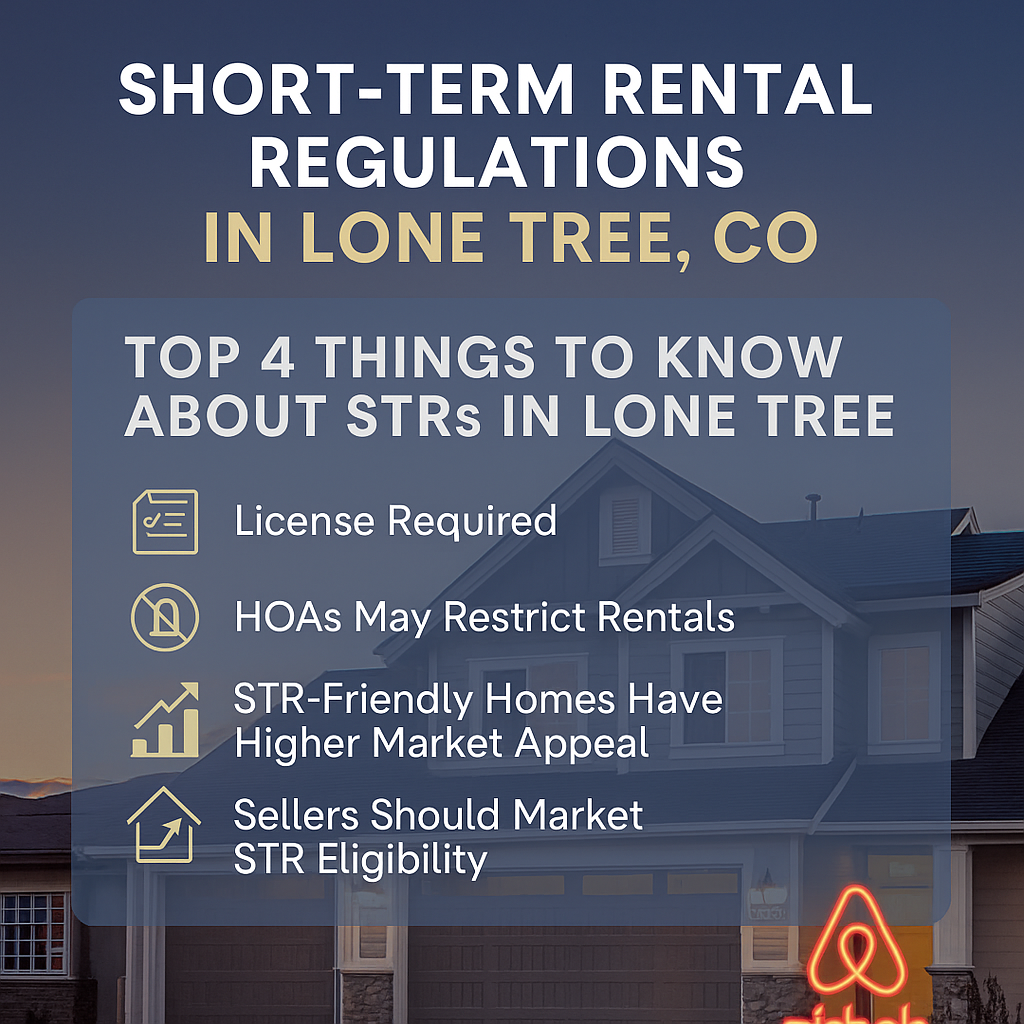
Why Short-Term Rentals Matter in Lone Tree Real Estate
With the rise of platforms like Airbnb and VRBO, many buyers and investors in Lone Tree, Colorado are exploring short-term rentals as an income stream. At the same time, homeowners selling property in Lone Tree are finding that short-term rental potential (or restrictions) can affect property value and buyer demand.
Whether you’re an investor seeking cash flow or a seller looking to position your home competitively, understanding Lone Tree’s short-term rental regulations is key.
Current Short-Term Rental Rules in Lone Tree, CO
Like many cities in Douglas County, Lone Tree has established guidelines for short-term rentals to balance community needs and homeowner rights. While rules can change, here are some of the most important considerations:
Licensing Requirements – Lone Tree requires property owners to obtain a short-term rental license or permit before listing on Airbnb, VRBO, or similar platforms.
Primary Residence Requirement – Many short-term rental ordinances limit rentals to a host’s primary residence or place restrictions on non-owner-occupied homes.
Safety Standards – Homes must meet safety requirements such as working smoke detectors, carbon monoxide alarms, and emergency exits.
Taxes & Fees – Owners may need to collect and remit lodging taxes to the city or county.
HOA Restrictions – Many Lone Tree neighborhoods fall under HOA governance. Some HOAs prohibit or restrict short-term rentals regardless of city regulations.
Occupancy Limits – Rules may limit how many guests can stay at one time, often tied to bedroom count or square footage.
Noise & Parking – Short-term rentals are subject to nuisance rules designed to protect neighborhood peace, including quiet hours and parking limits.
What Buyers Should Know About Short-Term Rentals
If you’re buying a home in Lone Tree, consider:
Check Local Ordinances – Verify whether short-term rentals are permitted and under what conditions.
HOA Rules Matter – Even if Lone Tree allows STRs, your HOA may not. Always review covenants and bylaws.
Investment Value – Homes with STR potential may command a premium, but only if they comply with regulations.
Long-Term Strategy – Consider whether you want a short-term rental, long-term rental, or personal use.
What Sellers Should Know About Short-Term Rentals
If you’re selling a home in Lone Tree:
Highlight STR Potential – If your property is licensed or eligible for short-term rental, market it to buyers as an income opportunity.
Be Transparent – Disclose any HOA or city restrictions up front to avoid surprises.
Market to Investors – STR-friendly homes may appeal to investors in addition to traditional buyers.
The Impact on Lone Tree Real Estate
Short-term rental regulations shape buyer demand and seller opportunities in Lone Tree. Properties that comply with city and HOA rules can attract investors looking for steady cash flow. On the other hand, homes in restricted areas may appeal more to primary residents who value quiet, stable neighborhoods.
Final Thoughts
If you’re considering buying or selling property in Lone Tree, CO, short-term rental regulations should be part of your decision-making process. Understanding the balance of city rules, HOA restrictions, and market demand can help you make the right move in today’s Douglas County real estate market.
👉 Ready to explore homes in Lone Tree or sell your property with expert guidance? Contact Engle Homes Group today—we’ll help you navigate short-term rental regulations and maximize your real estate goals.
|


or another way