
Published April 30, 2026
Shared Wells in Colorado: Hidden Risks Every Buyer Should Understand

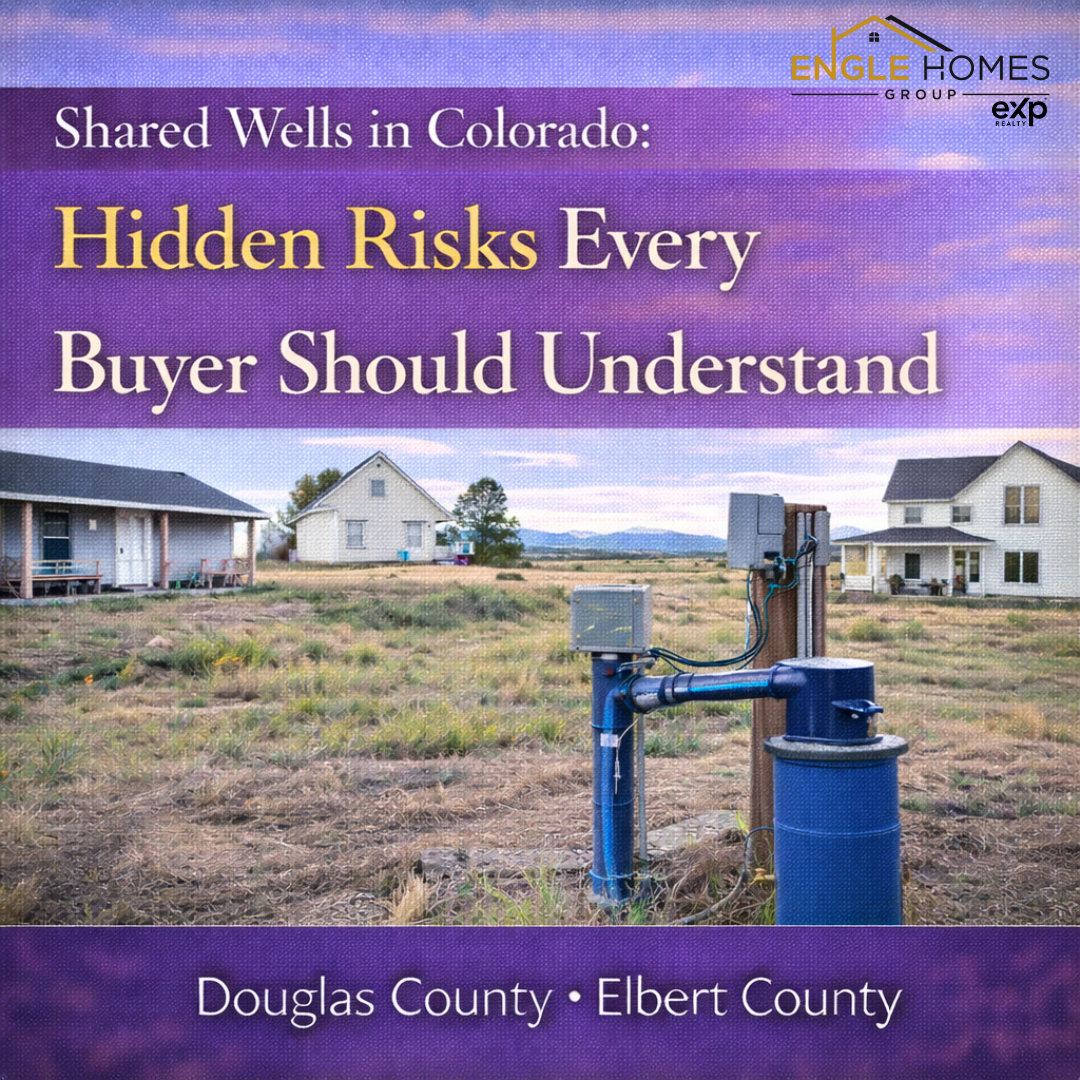
Shared Wells in Colorado: Hidden Risks Every Buyer Should Understand
- If you're buying a home or land in Elbert County or Douglas County, you may come across a property that uses a:
- 👉 Shared Well
- At first glance, it can seem like a simple setup. Multiple homes share one water source—easy, right?
- Not exactly.
- Shared wells can work well if structured correctly, but they also come with risks that many buyers overlook.
What Is a Shared Well?
A shared well is a single water source that serves multiple properties.
Instead of each home having its own well, owners share:
- Water supply
- Maintenance responsibility
- Infrastructure
This setup is more common in rural areas where drilling multiple wells may not be practical.
Why Shared Wells Exist
Shared wells are often used to:
- Reduce drilling costs
- Serve smaller subdivided parcels
- Provide access where water is limited
In areas like Elbert County, this can make certain properties more affordable upfront.
The Biggest Risks of Shared Wells
- Here’s where buyers need to pay close attention.
1. Legal Agreement Issues
- A shared well should ALWAYS have a written Shared Well Agreement.
Without one:
- Responsibilities may be unclear
- Disputes can arise
- Lenders may refuse financing
Even with an agreement, poorly written terms can cause problems.
2. Maintenance & Cost Disputes
Who pays for:
- Pump replacement?
- Electrical issues?
- Repairs?
If one party refuses to pay, it can impact everyone using the well.
3. Water Usage Conflicts
More users = more demand.
Issues can include:
- Reduced water pressure
- Overuse by one party
- Seasonal shortages
This is especially important for properties with acreage or livestock.
4. Financing Challenges
- Some lenders are cautious with shared wells.
They often require:
- A recorded agreement
- Defined access rights
- Maintenance terms
Without these, financing can fall through.
5. Easement & Access Problems
You must confirm:
- Legal access to the well
- Utility easements
- Ability to service the system
If the well is located on another property, this becomes even more important.
6. Future Resale Impact
Shared wells can:
- Limit buyer pool
- Raise concerns during inspection
- Slow down resale
Not all buyers are comfortable with shared systems.
What Should Be in a Strong Shared Well Agreement?
A proper agreement should clearly outline:
- ✔ Ownership of the well
- ✔ Maintenance responsibilities
- ✔ Cost-sharing structure
- ✔ Water usage rights
- ✔ Access easements
- ✔ Dispute resolution process
If any of these are missing—there’s risk.
Elbert County vs Douglas County Considerations
Elbert County
- More shared wells due to rural properties
- Greater flexibility—but more risk if not structured properly
Douglas County
- Fewer shared wells
- More reliance on municipal systems
- Stricter lending and development standards
When a Shared Well CAN Be a Good Option
Shared wells can work well when:
- The agreement is clear and recorded
- All parties are cooperative
- Water supply is strong
- Usage is reasonable
Common Buyer Mistakes
- Not reviewing the shared well agreement
- Assuming all shared wells are the same
- Not verifying water capacity
- Ignoring lender requirements
- Not confirming legal access
These are the biggest deal-breakers.
Shared wells in Colorado can be a cost-effective solution—but they come with shared responsibility and potential risk.
- 👉 The agreement matters
- 👉 The water supply matters
- 👉 The people involved matter
If you're buying in Douglas or Elbert County, this is something you need to fully understand before closing.
If you have questions about shared wells, water rights, rural properties, or buying land in Douglas or Elbert County, I’m happy to walk through the full picture so you can make a confident decision.
Marjorie Engle – Realtor
📞 303-881-2707
🌐 www.marjorieengle.com
|


or another way