Published January 27, 2026
Radon Mitigation Requirements for Selling in Colorado

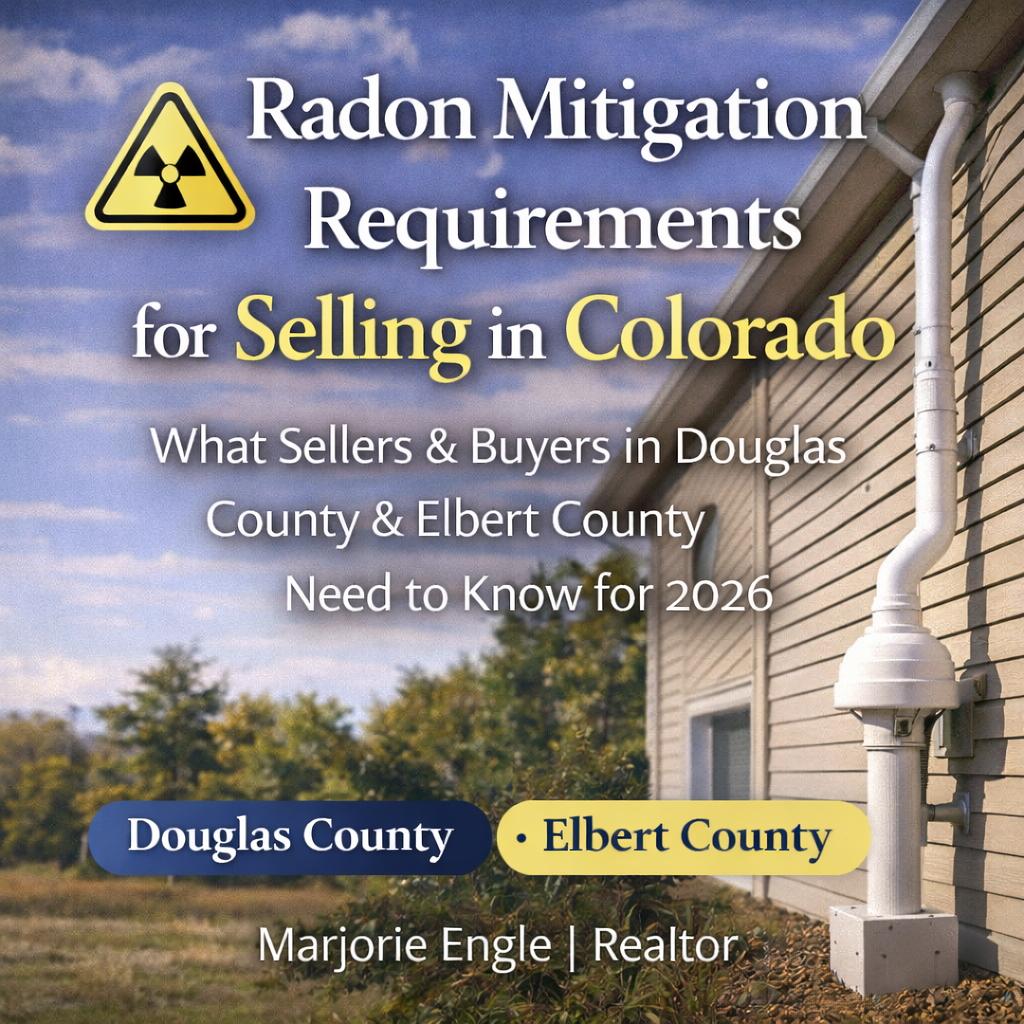
Radon Mitigation Requirements for Selling in Colorado
What Sellers and Buyers in Douglas & Elbert County Need to Know in 2026**
- Radon has become one of the most common topics in Colorado real estate transactions — and one of the most misunderstood. Sellers often ask, “Am I required to install a radon system before I sell?” Buyers ask, “Is this home safe?”
- If you’re buying or selling in Douglas County or Elbert County, understanding radon mitigation requirements in Colorado is essential to avoiding delays, contract issues, and confusion.
Here’s the clear, honest explanation.
🏡 What Is Radon and Why Does It Matter in Colorado?
Radon is a naturally occurring radioactive gas that comes from the breakdown of uranium in soil and rock. Colorado has some of the highest radon levels in the country, which means testing and mitigation are extremely common in real estate transactions across:
- Castle Rock
- Parker
- Highlands Ranch
- Franktown
- Larkspur
- Elizabeth
- Kiowa
- Rural Elbert County
Radon is odorless and invisible, so the only way to know the level is through testing.
⚖️ Is Radon Mitigation Legally Required to Sell a Home in Colorado?
Here’s the truth:
- No — Colorado does NOT legally require a seller to install a radon mitigation system before selling a home.
- However, in practice, radon mitigation often becomes part of the transaction because:
- Buyers usually request radon testing during inspections
- Elevated levels commonly lead to buyer objections
- Many sellers agree to install mitigation to keep the deal together
- Lenders and buyers increasingly expect safe radon levels
So while it’s not mandated by law, it is very common contractually.
🧪 What Happens During a Real Estate Transaction
In most Colorado transactions, the process looks like this:
- Buyer orders a radon test during the inspection period
- Results come back
- If levels are elevated (typically 4.0 pCi/L or higher), buyer raises concern
- Buyer may request mitigation as part of inspection negotiations
- Seller can agree, negotiate, or decline depending on contract terms
In competitive markets, sellers sometimes install mitigation before listing to remove friction.
🛠 What Is a Radon Mitigation System?
- A radon mitigation system is a professionally installed system designed to safely vent radon gas out of the home before it accumulates indoors.
Most systems include:
- A vent pipe from the basement or crawlspace
- A quiet exterior fan
- Sealed sump or foundation penetration points
- Proper exterior discharge above roofline
These systems are common, effective, and relatively low-maintenance.
💵 Cost of Radon Mitigation in Douglas & Elbert County
While prices vary by home type, most homeowners in the area can expect:
- Radon system installation costs that are generally manageable
- Long-term peace of mind for future buyers
- Minimal impact on aesthetics when properly installed
In many cases, installing mitigation can actually help the home sell faster, especially with cautious buyers.
🧠 Why Sellers Should Consider Mitigation Before Listing
Sellers who proactively test and mitigate often benefit from:
- Fewer buyer objections
- Stronger buyer confidence
- Smoother inspections
- Fewer renegotiations
- Faster path to closing
This is especially helpful in areas where radon is well known, such as much of Douglas County and Elbert County.
🧭 Does Radon Affect Property Value?
- Not typically — if handled correctly.
Homes with:
- A professionally installed radon system
- Clear documentation
- Recent test results showing safe levels
often perform just as well as homes without radon issues. In fact, mitigation can be seen as a value-add because the problem has already been addressed.
The issue arises when:
- Sellers avoid testing
- Buyers discover high levels late in the process
There is uncertainty or lack of transparency
🏘 Why Radon Is Common in Douglas & Elbert County
Both counties sit in geological zones where radon occurs naturally. This has nothing to do with:
- Home cleanliness
- Neighborhood quality
- Construction quality
It’s simply a geographic reality in much of Colorado, which is why education and mitigation are so normalized here.
There is no legal requirement in Colorado forcing a seller to install radon mitigation before selling — but in real-world transactions across Douglas County and Elbert County, mitigation is extremely common and often expected. Testing early, understanding your numbers, and addressing radon proactively can protect your deal and strengthen buyer confidence.
If you’re selling a home or preparing to buy in Douglas County or Elbert County, I can help you navigate radon testing, mitigation expectations, and how to avoid inspection-related surprises so your transaction stays smooth and stress-free.
Marjorie Engle – Realtor
📞 303-881-2707
🌐 www.marjorieengle.com

Marjorie Engle
| Engle Homes Group | eXp Realty
or another way