
Published October 2, 2025
💡 Pros and Cons of a Metro District Tax in Colorado Real Estate

What Is a Metro District Tax?
In Colorado, many newer neighborhoods are part of metropolitan districts (commonly called metro districts). These districts are created to help fund infrastructure such as roads, water, sewer, and parks in growing communities. Homeowners in a metro district pay an extra property tax assessment—known as a metro district tax—on top of standard county property taxes.
For buyers and sellers, understanding the pros and cons of a metro district tax is critical when evaluating the true cost of homeownership or preparing to market a property.
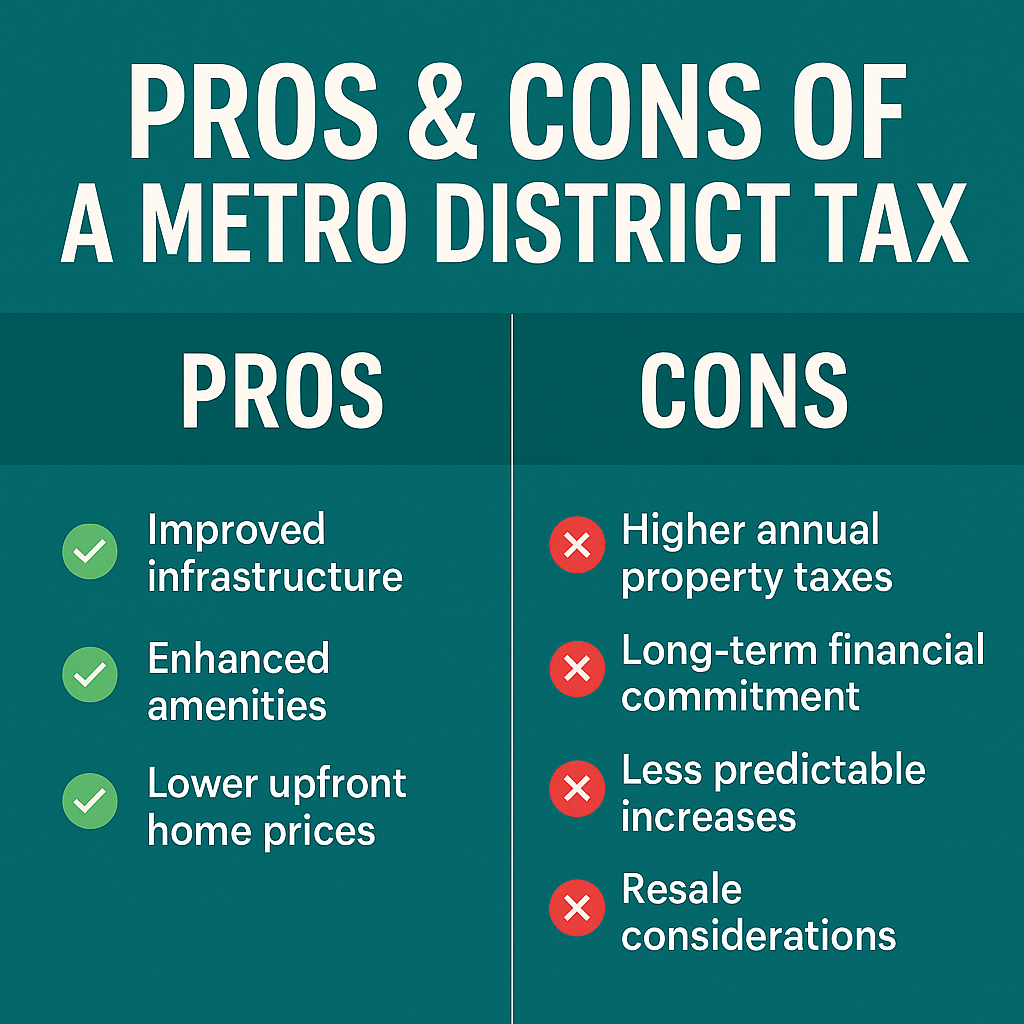
✅ Pros of a Metro District Tax
1. Improved Community Infrastructure
Metro districts fund the development of roads, sidewalks, water systems, and utilities—ensuring new neighborhoods are move-in ready.
2. Enhanced Amenities
Funds often go toward parks, trails, recreation centers, and community features that make neighborhoods more attractive.
3. Lower Upfront Home Prices
Because infrastructure costs are financed through the district instead of being fully built into the price of the home, buyers may initially pay less for new construction.
4. Shared Community Investment
All homeowners in the district share the cost of improvements, creating consistent funding for community upkeep.
⚠️ Cons of a Metro District Tax
1. Higher Annual Property Taxes
Metro district taxes can add thousands to your yearly property tax bill. Some homeowners find themselves paying mill levies much higher than those outside of a district.
2. Long-Term Financial Commitment
These taxes often last decades, as they are tied to bonds issued to fund infrastructure. Homeowners may be paying the tax long after the original improvements are complete.
3. Less Predictable Increases
Metro districts can adjust mill levies over time, which means your property tax bill could rise unexpectedly.
4. Resale Considerations
Higher taxes may make it harder to sell your home compared to a similar property outside of a metro district. Buyers often weigh the tax burden when choosing between neighborhoods.
What Buyers Should Know
Always review the Special District Disclosure provided in your Colorado real estate contract.
Factor the metro district tax into your monthly mortgage + escrow payments.
Compare communities with and without metro districts to see what works best for your budget and lifestyle.
What Sellers Should Know
Be upfront about the metro district tax when marketing your home. Transparency builds buyer trust.
Highlight the amenities and infrastructure the tax supports—such as parks, trails, and recreation centers.
Work with your real estate agent to position your home competitively against nearby neighborhoods without metro district taxes.
Final Thoughts
Metro district taxes are a double-edged sword: they provide better infrastructure and amenities but also increase the long-term cost of homeownership.
At Engle Homes Group, we help buyers and sellers in Castle Rock, Parker, Elizabeth, and surrounding Colorado communities understand how metro district taxes impact property values, budgets, and resale potential.
👉 Thinking about buying or selling a home in a metro district? Let’s connect today—we’ll guide you through the pros, cons, and everything in between.

Marjorie Engle
| Engle Homes Group | eXp Realty
or another way