
Published October 7, 2025
🏡 How Property Lines Are Determined in Elbert County, CO: A Complete Guide for Buyers and Sellers

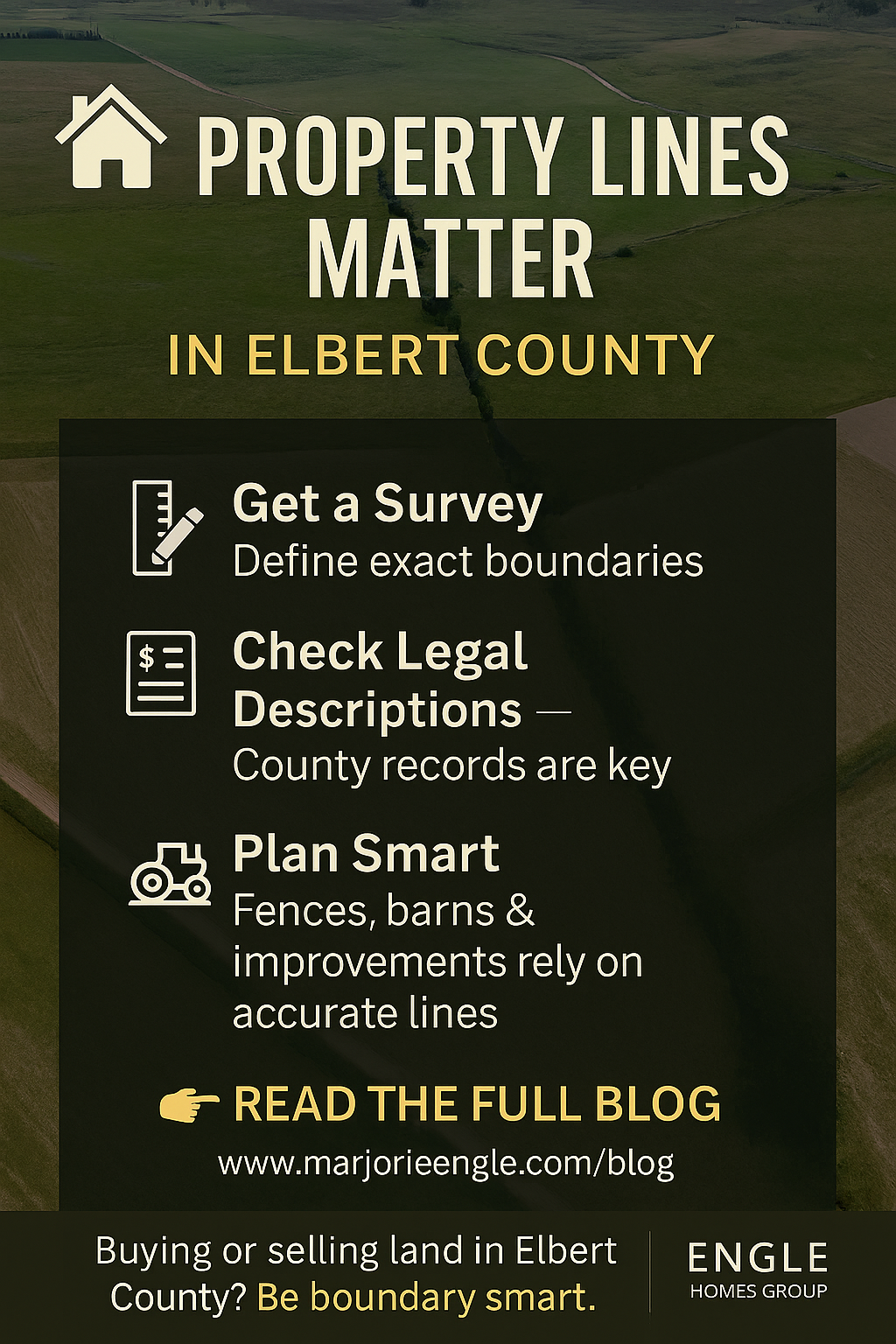
📏 Why Property Lines Matter in Elbert County Real Estate
Buying or selling property in Elbert County, Colorado often involves more than just a house—it may include acreage, easements, wells, and rural land features. Accurately understanding property lines is essential to avoid disputes, protect your investment, and ensure a smooth closing.
Whether you’re purchasing a horse property, building on vacant land, or selling your family ranch, knowing how boundaries are determined will give you clarity and confidence during your transaction.
📝 1. County Records and Legal Descriptions
The first step to understanding property boundaries is reviewing the legal description of the land. This information is typically found on:
📄 The property deed
📐 Title commitment documents
🗺 County Assessor or Clerk & Recorder’s records
These legal descriptions may use metes and bounds, lot and block, or Public Land Survey System (PLSS) methods, depending on whether the property is in a subdivision or rural acreage.
🧭 2. Professional Land Surveys
While county records are a starting point, the most accurate way to determine property lines is by hiring a licensed land surveyor. In Elbert County, surveys are often crucial for:
Rural acreage without visible boundary markers
Installing fences, barns, or driveways near the edge of a lot
Resolving boundary disputes with neighbors
Subdividing land or applying for building permits
A surveyor uses precise equipment to mark the corners and edges of your parcel, creating a plat or survey map that can be recorded with the county.
🚧 3. Easements and Right-of-Ways
Property lines aren’t just about where your land ends—they also include easements, which grant others certain usage rights over your property. Common easements in Elbert County include:
🚜 Access easements for shared driveways or private roads
💧 Utility easements for power lines, gas, or water
🐴 Agricultural easements on larger rural parcels
It’s essential to understand how these easements affect what you can build and where.
🌿 4. Natural Land Features vs. Legal Boundaries
In rural areas, fence lines and natural landmarks (like tree rows or creek beds) are not always the true legal property line. It’s common for older fences to be off by several feet or more, especially on larger parcels.
💡 Tip for buyers: Always get a survey done, even if the property appears clearly marked.
💡 Tip for sellers: If your fence line doesn’t match the survey, it’s best to disclose this upfront to avoid conflicts during inspection or appraisal.
📌 5. How Property Line Disputes Are Resolved
If a boundary dispute arises in Elbert County, typical solutions include:
Commissioning a new professional survey accepted by both parties
Mediation or neighbor agreements to avoid litigation
Quiet title actions through the courts if boundaries are contested long-term
Clear documentation and early due diligence often prevent disputes before they escalate.
🏠 Why This Matters for Buyers and Sellers
✅ For Buyers
Know exactly what you’re purchasing.
Plan improvements like barns, fencing, or additions confidently.
Avoid future legal disputes or encroachments.
✅ For Sellers
Prevent last-minute surprises during title or inspection.
Increase buyer trust and streamline the closing process.
Market your acreage with accurate surveys and maps.
✨ Final Thoughts
Understanding how property lines are determined in Elbert County, CO is a critical part of buying or selling rural real estate. From legal descriptions to professional surveys, taking the time to verify boundaries can save you headaches—and money—down the road.
👉 Thinking about buying or selling acreage, horse property, or land in Elbert County?
Contact Engle Homes Group—we specialize in rural real estate and can guide you through surveys, easements, and everything you need to make informed decisions.

Marjorie Engle
| Engle Homes Group | eXp Realty
or another way