
Published May 4, 2026
Heating with Wood in Colorado: 2026 Regulations, Insurance Rules & What Homeowners Need to Know

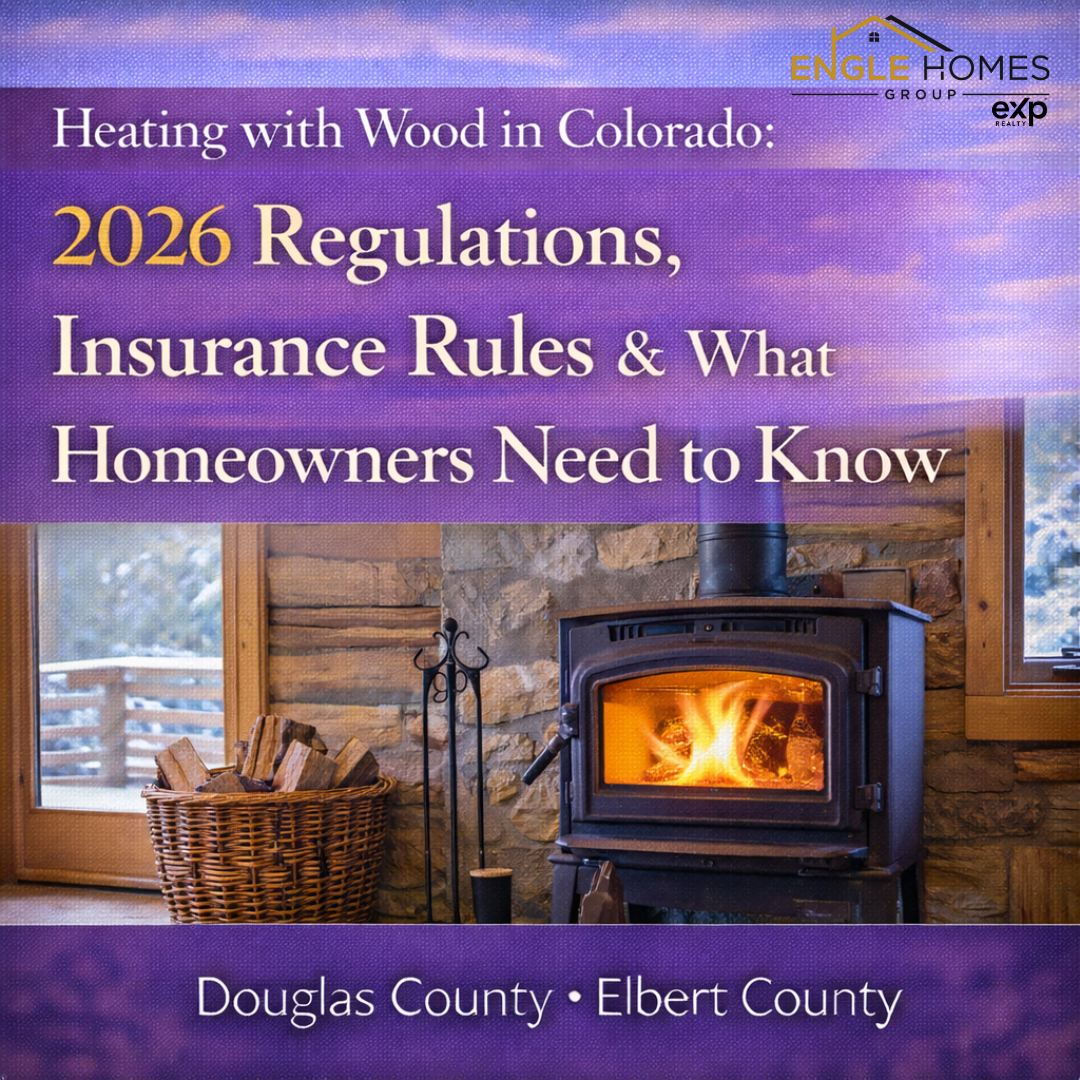
Heating with Wood in Colorado: 2026 Regulations, Insurance Rules & What Homeowners Need to Know
- Wood stoves are a popular feature in homes across Douglas County and Elbert County, especially for buyers looking at acreage, cabins, or rural properties.
They offer:
- Efficient heating
- Lower utility costs
- A backup heat source during outages
But here’s the reality in 2026:
👉 Wood stoves are regulated—and they can impact your insurance.
- If you’re buying or selling a home with a wood stove, this is something you need to understand.
Are Wood Stoves Legal in Colorado?
- Yes—but they must meet state and local regulations.
Most importantly:
- 👉 New installations must be EPA-certified wood stoves
Older, non-certified stoves may:
- Be restricted
- Require replacement upon sale or installation
- Affect insurance eligibility
Colorado Wood Stove Regulations (2026)
1. EPA Certification Required
All new wood stoves must meet EPA emission standards.
This ensures:
- Cleaner air
- More efficient burning
- Reduced smoke output
2. Installation Requirements
Wood stoves must be installed according to:
- Manufacturer guidelines
- Local building codes
- Proper clearance from walls and ceilings
3. Chimney & Venting Compliance
- Proper venting is critical.
Requirements include:
- Approved chimney systems
- Correct height and clearance
- Safe exhaust ventilation
4. Permit Requirements
In many cases, you will need:
- 👉 A building permit for installation or replacement
Always verify with the county.
Insurance Considerations (This Is Big)
- This is where many homeowners run into issues.
1. Insurance Companies May Require Inspection
Before issuing or renewing a policy, insurers may require:
- Professional inspection
- Certification of proper installation
- Documentation of compliance
2. Higher Insurance Premiums
Homes with wood stoves may have:
- Higher premiums
- Additional liability considerations
3. Older Stoves Can Be a Problem
Non-EPA-certified or improperly installed stoves may:
- Be denied coverage
- Require removal or upgrade
- Delay closing during a sale
4. Secondary vs Primary Heat Source
Some insurers require:
- 👉 A primary heat source (like furnace or electric)
Wood stoves may not qualify as the sole heating system.
Elbert County vs Douglas County
Elbert County
- More homes rely on wood stoves
- More rural properties with alternative heating
- Greater flexibility—but still subject to code
Douglas County
- More suburban homes
- Stricter HOA and insurance expectations
- Wood stoves less common as primary heat
Wood Stove Inspections During a Sale
- If you're selling a home with a wood stove:
Buyers may request:
- Inspection reports
- Certification of installation
- Proof of compliance
This can impact negotiations.
Common Buyer Mistakes
- Assuming all wood stoves are compliant
- Not verifying EPA certification
- Ignoring insurance requirements
- Skipping inspection
- Not budgeting for replacement
When Wood Stoves Are a Great Feature
- ✔ Backup heat during power outages
- ✔ Cost-effective heating in winter
- ✔ Attractive feature for rural buyers
But only if installed correctly.
Wood stoves in Colorado are still a great feature—but they must meet 2026 regulations and insurance standards.
- 👉 EPA certification matters
- 👉 Proper installation matters
- 👉 Insurance approval matters
If you’re buying or selling in Douglas or Elbert County, this is something you need to verify upfront.
If you have questions about home features, inspections, rural properties, or buying in Douglas or Elbert County, I’m happy to walk through the full picture so you can make a confident decision.
Marjorie Engle – Realtor
📞 303-881-2707
🌐 www.marjorieengle.com
|


or another way