
Published April 21, 2026
From Off-Grid to Fully Functional: What It Costs to Convert a Dry Cabin to a Wet Cabin in Colorado

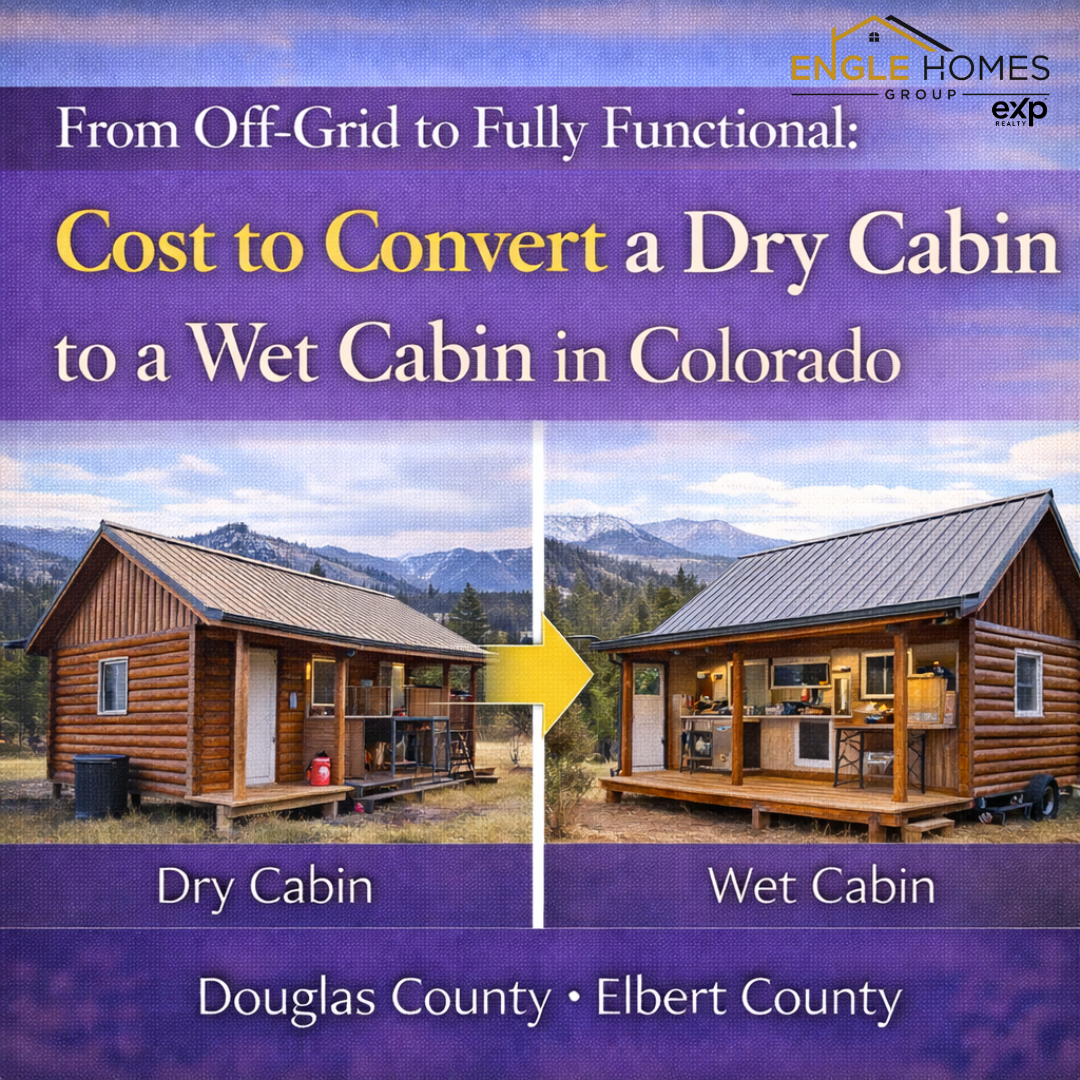
- From Off-Grid to Fully Functional: What It Costs to Convert a Dry Cabin to a Wet Cabin in Colorado
- If you’ve been looking at cabins or rural properties in Elbert County or Douglas County, you’ve probably come across the term:
- 👉 “Dry Cabin”
- These properties can be appealing due to lower purchase prices—but converting one into a “wet cabin” (with full utilities) comes with real costs.
- Here’s what buyers need to know before taking on this type of project.
What Is a Dry Cabin vs a Wet Cabin?
Dry Cabin
- No running water
- No septic system
- Often no electricity
- May use outhouse, propane, or generator
Wet Cabin
- Full plumbing (kitchen, bathroom)
- Septic system installed
- Water source (well or public water)
- Electrical connection
The Real Cost to Convert a Dry Cabin (2026 Estimates)
- Costs vary significantly depending on location, terrain, and access—but here are realistic ranges in Colorado.
1. Drilling a Well
Estimated Cost:
👉 $25,000 – $60,000+
Factors that impact cost:
- Depth required
- Geological conditions
- Pump system installation
In Elbert County, wells can be deeper depending on location.
2. Septic System Installation
Estimated Cost:
👉 $15,000 – $40,000+
Includes:
- Perc test
- Engineering
- Installation
If soil conditions are poor, engineered systems can increase costs.
3. Bringing in Electricity
Estimated Cost:
👉 $5,000 – $50,000+
Depends on:
- Distance from power lines
- Terrain
- Utility provider
Some rural properties require long line extensions.
4. Plumbing Installation
Estimated Cost:
👉 $10,000 – $30,000+
Includes:
- Interior plumbing
- Water heater
- Fixtures
Connecting to well and septic
5. Structural & Code Upgrades
Estimated Cost:
👉 $10,000 – $50,000+
Older cabins may require:
- Insulation upgrades
- Electrical rewiring
- Structural improvements
- Permitting to meet residential code
Total Estimated Conversion Cost
👉 $65,000 – $200,000+
- Yes—it can add up quickly.
- That’s why many buyers underestimate the true cost of converting a dry cabin.
Elbert County vs Douglas County Considerations
Elbert County
- More dry cabins and off-grid properties
- Greater flexibility for rural living
- Often higher utility installation costs
Douglas County
- Fewer dry cabins
- Easier access to utilities
- More building restrictions in some areas
Permits & Approvals (Don’t Skip This)
You will likely need:
- Well permit
- Septic permit
- Building permits
- Electrical permits
Skipping permits can create serious resale and legal issues later.
Is It Worth Converting a Dry Cabin?
- It depends on your goals.
It may make sense if:
- You want a long-term property
- You’re buying below market value
- You want to customize the property
It may NOT make sense if:
- You’re looking for a quick investment
- Utility costs are too high
- The structure needs major upgrades
Common Buyer Mistakes
- Underestimating utility costs
- Not verifying water access
- Skipping perc tests
- Assuming electricity is nearby
- Not budgeting for permits
These are the biggest reasons projects go over budget.
- Converting a dry cabin to a wet cabin in Colorado can be a great way to create value—but it’s not a cheap or simple project.
- 👉 The purchase price may be low
- 👉 But the improvement costs can be significant
- Understanding the full cost upfront helps you make a smart investment decision.
If you’re considering buying a cabin, converting off-grid property, or investing in rural real estate in Douglas or Elbert County, I’m happy to walk through the full picture so you can make a confident decision.
Marjorie Engle – Realtor
📞 303-881-2707
🌐 www.marjorieengle.com

Marjorie Engle
| Engle Homes Group | eXp Realty
or another way