
Published December 31, 2025
**🏘️ Are Metro Districts Worth It?

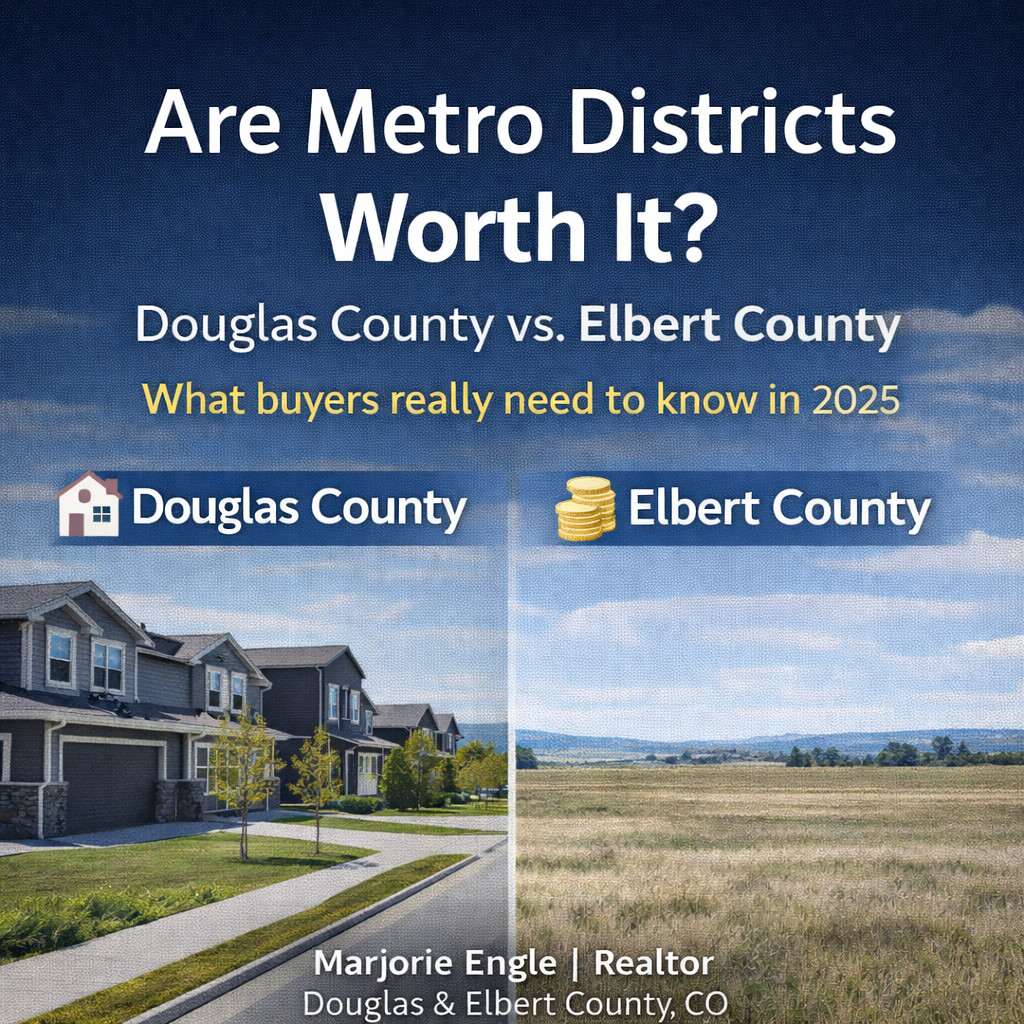
**🏘️ Are Metro Districts Worth It?
What Colorado Buyers and Sellers Need to Understand in 2026**
If you’re shopping for a home in Douglas County or Elbert County, Colorado, you’ve likely come across listings that mention a metro district. For some buyers, metro districts are a deal-breaker. For others, they’re a practical way to access newer homes and amenities.
So the real question is not “Are metro districts bad?” — it’s whether a metro district makes sense for your situation.
Here’s a straightforward breakdown of how metro districts work, their pros and cons, and when they are — or are not — worth it.
🧾 What Is a Metro District?
A metropolitan district is a special taxing district created to fund infrastructure for a community. This typically includes:
Roads and sidewalks
Water and sewer systems
Parks, trails, and open space
Recreation centers and community amenities
Instead of the developer paying these costs upfront, the district issues bonds and homeowners repay them over time through property taxes.
Metro districts are common in newer Douglas County communities and much less common in Elbert County.
💰 Why Builders Use Metro Districts
Metro districts allow developers to:
Build communities faster
Reduce the upfront cost of new construction
Offer homes at lower purchase prices initially
For buyers, this often means:
Newer homes with modern layouts
Finished neighborhoods with amenities
Lower HOA dues paired with higher property taxes
⚖️ Pros of Buying in a Metro District
Metro districts can make sense if:
You want new construction
You value community amenities
You plan to stay in the home long enough to justify the cost
You prefer predictable infrastructure maintenance
For many buyers in Parker, Castle Rock, and Highlands Ranch, metro districts are simply part of the market.
🚨 Cons Buyers Must Understand
Metro districts are not all the same. Common concerns include:
Higher property taxes
Long-term bond repayment (often 20–40 years)
Tax rates that may increase
Less control over district decisions
Buyers who don’t fully understand the tax structure can be surprised later — which is why education matters.
📍 Douglas County vs. Elbert County
This is where the comparison becomes important:
Douglas County
Metro districts are common in newer developments
Buyers trade higher taxes for amenities and convenience
Often balanced by strong resale demand
Elbert County
Metro districts are rare
Lower property taxes overall
Fewer HOA and district fees
More responsibility for private maintenance
Many buyers compare metro district communities in Douglas County with non-metro district properties in Elbert County to decide what fits best.
🧭 Who Metro Districts Are Best For
Metro districts often work well for:
Buyers wanting low-maintenance living
Families who value community amenities
Buyers who prioritize new construction
Those comfortable with higher taxes instead of higher HOA dues
They may not be ideal for buyers seeking:
Lower long-term taxes
Acreage or rural living
Fewer government layers
Maximum financial flexibility
💵 Do Metro Districts Hurt Resale Value?
Not necessarily.
Homes in metro districts:
Can resell well in strong markets
Attract buyers who want amenities and newer homes
May face more scrutiny during market slowdowns
The key is proper pricing and disclosure. A well-explained metro district is rarely a deal-breaker when expectations are set upfront.
Metro districts are not good or bad — they are a tool. In Douglas County, they often make sense for buyers who want new construction and amenities. In Elbert County, buyers usually trade amenities for lower taxes and more freedom. The right choice depends on your budget, lifestyle, and long-term plans.
If you’re deciding between a home with a metro district or one without — or trying to sell a property in either situation — I can help you break down the real costs, taxes, and resale implications so you can make a confident decision.
Marjorie Engle – Realtor
📞 303-881-2707
🌐 www.marjorieengle.com

Marjorie Engle
| Engle Homes Group | eXp Realty
or another way