
Published October 1, 2025
📑 Anatomy of a Real Estate Contract in Colorado: What Buyers & Sellers Need to Know

Why Understanding a Real Estate Contract Matters
Buying or selling a home in Colorado isn’t just about agreeing on a price—it’s about understanding the real estate contract that outlines every detail of the transaction. For both buyers and sellers, this document is legally binding and shapes everything from negotiations to closing. Knowing the anatomy of a real estate contract helps you protect your interests and avoid surprises.
The Key Sections of a Colorado Real Estate Contract
Here’s a breakdown of the most important components:
1. Parties to the Contract
Identifies the buyer and seller by name.
Ensures both parties are legally bound once signed.
2. Property Details
Legal description and address of the property.
Includes fixtures and personal property (appliances, sheds, etc.).
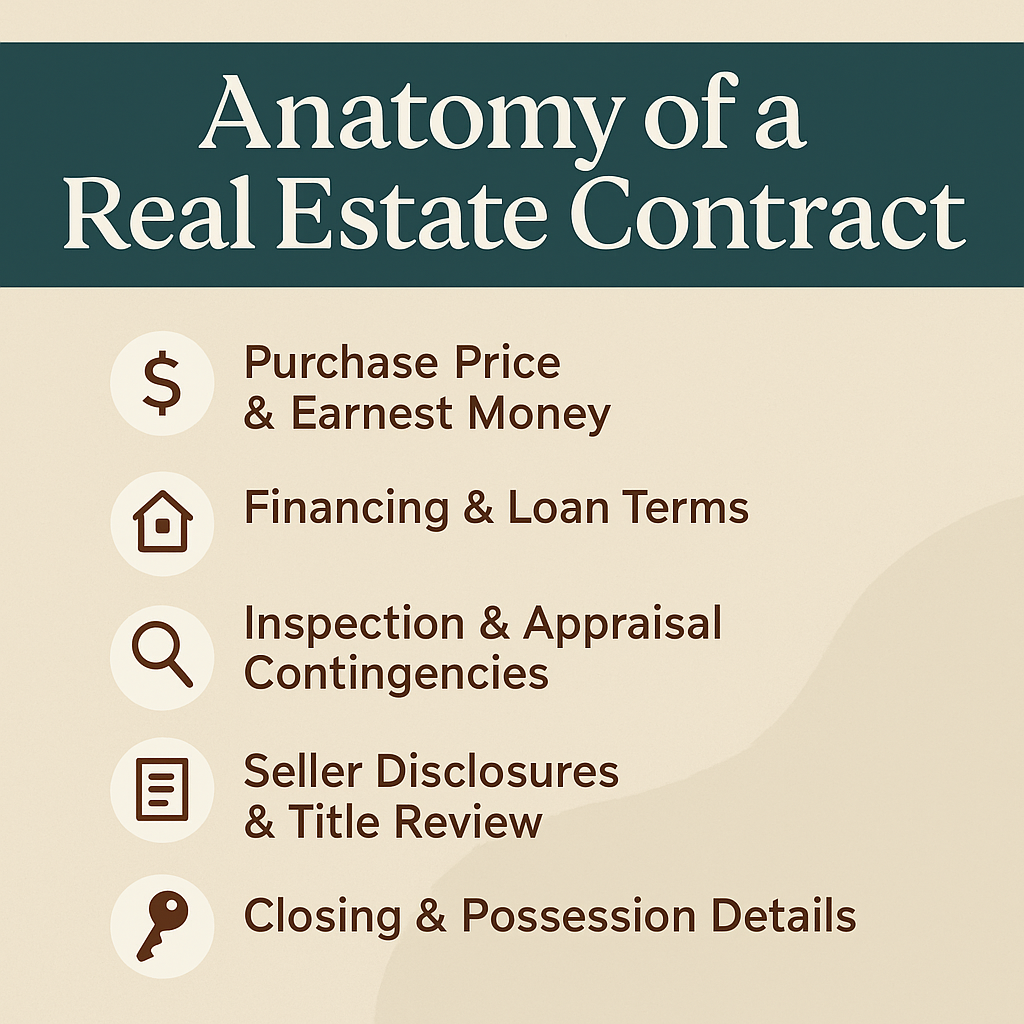
3. Purchase Price & Earnest Money
States the agreed purchase price.
Earnest money deposit shows buyer’s commitment, typically 1–3% of the purchase price in Colorado.
4. Financing & Loan Terms
Specifies whether the purchase is cash or financed.
Includes loan approval deadlines and contingency protections.
5. Dates & Deadlines
Critical in Colorado contracts, covering inspection, appraisal, loan objection, title review, and closing.
Missing a deadline can cause a deal to fall apart.
6. Title & HOA Documents
Seller must provide a clear title.
If the property is in an HOA, documents and rules are disclosed for buyer review.
7. Inspection Contingency
Allows the buyer to inspect the property for issues like foundation cracks, radon levels, or roof damage.
Buyers can request repairs, negotiate credits, or terminate if concerns aren’t resolved.
8. Appraisal Contingency
Protects the buyer if the appraised value is lower than the purchase price.
Seller and buyer may renegotiate or cancel.
9. Disclosures
In Colorado, sellers must disclose known material defects (roof leaks, foundation issues, etc.).
Environmental factors like radon or well water quality are common.
10. Closing & Possession
Specifies when closing will occur and when the buyer takes possession of the property.
Outlines prorations for taxes, HOA fees, and utilities.
Why This Matters for Buyers
Ensures transparency and legal protection.
Provides multiple safeguards through contingencies.
Gives a clear roadmap from offer to closing day.
Why This Matters for Sellers
Protects against liability with proper disclosures.
Ensures deadlines are met to avoid delays.
Outlines when and how funds will be transferred.
Final Thoughts
A real estate contract isn’t just paperwork—it’s the blueprint of your transaction. For Colorado buyers and sellers, understanding each section helps you make informed decisions, negotiate effectively, and move smoothly toward closing.
At Engle Homes Group, we guide clients in Elizabeth, Parker, Castle Rock, and surrounding areas through every detail of the contract so you can buy or sell with confidence.
👉 Ready to buy or sell your Colorado home? Let’s connect—we’ll make sure every detail in your contract is clear and in your best interest.

Marjorie Engle
| Engle Homes Group | eXp Realty
or another way