
Published July 3, 2025
5 Costly Mistakes to Avoid When Buying Homes or Land in Elbert County, CO

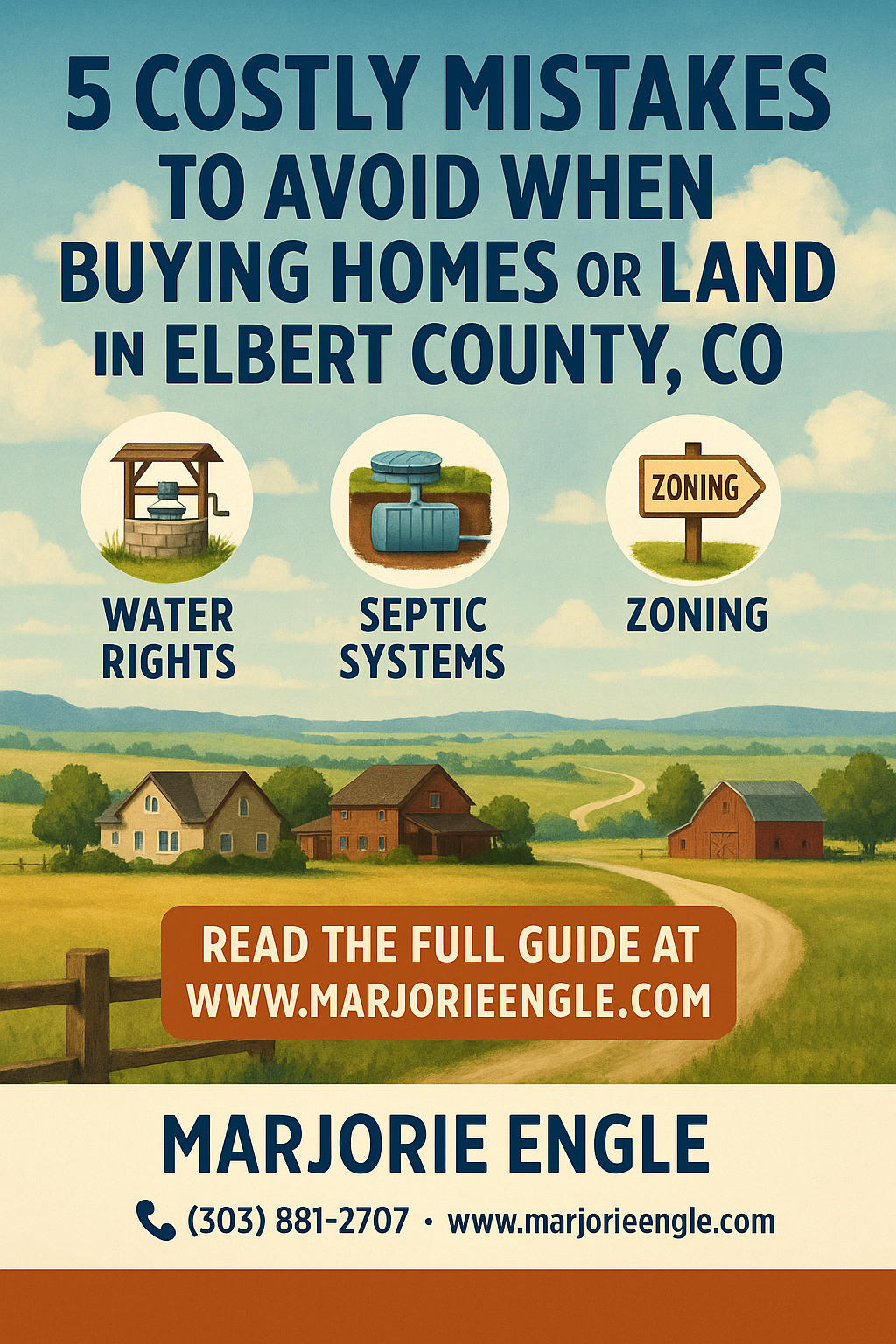
The dream of owning a slice of Colorado paradise in Elbert County is powerful. The vision of starry nights, rolling pastures, and ultimate privacy is what draws so many to this incredible part of the state.
But the path to securing that dream is paved with unique challenges not found in city or suburban real estate. A simple oversight can turn your dream into a costly nightmare.
Whether you're looking at finished homes for sale in Elbert County, CO, or a raw piece of land, this guide is your defense against the most common and expensive mistakes we see buyers make.
Mistake #1: Ignoring Water Rights and Well Issues
In town, you turn on a tap. In Elbert County, your water is a critical piece of infrastructure you own and are responsible for.
The Mistake: Assuming a working well has adequate water for your needs, or not understanding the legal rights associated with it. What each well allows for, domestic only? This is important. A low-producing well can't support a family and livestock, and "junior" water rights can be restricted during dry years.
The Keywords to Know: Well Permit, Gallons Per Minute (GPM), Water Rights, What the Well Allows for, Well Inspection.
How to Avoid It: Always make your offer contingent on a professional well inspection. This checks the pump's health and measures the flow rate. A true expert will also pull the well permit from the Colorado Division of Water Resources to understand its legal standing and any limitations.
Mistake #2: Underestimating Septic System Costs
Most properties in Elbert County use private septic systems, not city sewer lines. This is another major expense hiding underground. You must understand County requirements with Septic Use Permits.
The Mistake: Taking the seller's word that the system "works fine." A failing septic system is often invisible to the naked eye and can cost $15,000 to $30,000+ to replace.
The Keywords to Know: Septic Inspection, Leach Field, Septic Scope, Septic Use Permit.
How to Avoid It: Never, ever skip a professional septic inspection and scope. A camera is sent down the line to check for cracks or blockages. This is one of the wisest investments you can make during your due diligence period.
Mistake #3: Misunderstanding Zoning and Covenants
You found the perfect 10 acres to start your dog breeding business or build a large workshop. But is it allowed?
The Mistake: Believing that "no HOA" means "no rules." Elbert County has specific zoning laws, and many properties also have recorded covenants that can restrict land use, the number/type of animals allowed, or the size and style of outbuildings.
The Keywords to Know: Elbert County Zoning, Covenants, Land Use Restrictions.
How to Avoid It: Before making an offer, your agent should help you verify the specific county zoning and pull any and all recorded covenants for the property. Reading the fine print is essential to ensure you can use the land the way you envision.
Mistake #4: Forgetting About Practical Access & Utilities
The listing map shows a road, but what is that road really like?
The Mistake: Not considering year-round access or the cost to bring power to a build site. A beautiful parcel of land is useless if you can't get to it in March when the mud is deep, or if the electric company quotes you $50,000 to run power lines to your dream home's location.
The Keywords to Know: Property Access, Easement, Utility Costs.
How to Avoid It: Physically drive every inch of the access route. Ask locals about its condition during heavy snow or rain. If buying raw land, call the utility providers (like CORE Electric) for a preliminary quote before your inspection period ends.
Mistake #5: Choosing an Agent Who Isn't a Rural Specialist
This is the mistake that leads to all the others.
The Mistake: Using an agent who primarily sells tract homes in the suburbs. They may be great agents, but they don't have the specific, localized knowledge to ask the right questions about wells, septics, and zoning. They don't know who to call for inspections or what a red flag on a well permit looks like.
How to Avoid It: The single best way to protect your investment is to partner with a true Elbert County specialist. An expert who lives and breathes rural properties is your greatest asset.
A Note for Sellers
Being proactive about these issues can make your property significantly more attractive. Having a recent well and septic report available for buyers shows transparency and can lead to a faster, smoother sale with fewer negotiations.
Let our local expertise be your guide. Whether you're buying or selling in Elbert County, contact us today to ensure your real estate journey is a success.
|


or another way